The Fool Fools No One

October 25th, 2012

You can identify fools just by the way they walk down the street!*

This one from Ecclesiastes comes with a knowing smile, for who hasn’t seen it? What’s most amusing is how long ago this was said. Apparently there truly is nothing new under the sun.

Here’s a guy, his robe belted precariously somewhere between his buns and his knees, swashbuckling along in his affected superiority. It’s hard to think what he was thinking when he got out of bed at noon and dressed himself, except what a show he’d make. Of course, he’s right.

Check the expression: the curl of the lip, the droop of the lids, the mouth in perfect sullenness. How about the shoulders, nicely sloped, along with the spine, and a handshake that feels like spaghetti.

But he’s cool.

Not that the male gender has the whole corner on that market. It’s pretty common to notice a woman, young or old, who seems to think she’s projecting one thing but is actually revealing another . . . the state of her mind.

Funny about our fallenness, we don’t see our self-deceptions but everybody else does.

What’s inside always comes out, even in the way we walk.

Best to just be sure the mind is straight, then so will be the gait.


__________________

*Ecclesiastes 10:3, New Living Translation

Next: Avoid Extremes, Even Good Ones. Coming Monday.
7 Comments

Use your Brain, Save your Brawn

October 22nd, 2012

If the ax is dull and its edge unsharpened, more strength is needed, but skill will bring success.*

What can I get from this that isn’t already clear? Dull blade, harder work. Duh . . .

Then again, two truths are given here. The first about the tool, the second about how the tool is used. It’s the right use of both that will bring success.

Dull tools are a problem, but my bigger problem is the dull mind. I don’t doubt there are all manner of things I work harder at rather than smarter.

The word “hone” hits home. Hone the ax, hone the mind; the rest will fall into place.

I paint. There have been moments, not many, when someone will say, “Let me see your hands . . . I want to know what an artist’s hands look like.” What follows is rather a blank look. Better to ask to see a pianist’s hands. For a painter, they can be just arthritic stumps you can tape a brush to.** When you’re learning to paint, it’s not the hands you’re training, it’s the mind. Every time.

And it’s so with just about everything else.

Even with the ax . . . it’s a very dull mind that won’t soon see what the problem really is.

So, sharpen, sharpen, sharpen.

“But no,” says the ax, “it hurts. You’re changing my shape. I like being dull. Get away with that rasping tool.”

“No,” says the mind. “I like the way I am . . . the way I’ve always done things. My opinions don’t need scrutiny. I like my life being small . . . broke . . . limited . . . or fill in the blank.”

Any success in any thing implies a certain discipline. A sharpening. A hurtful/helpful grinding.

It’s your greatest tool, your mind.

Hone it.

It’ll give you the edge you need.


________________

*   Ecclesiastes 10:10
** Such was the case with the aging Renoir.

Next: The Fool’s Cool. Coming Thursday.

9 Comments

Timing is Everything

October 18th, 2012

Okay, timing is everything . . . it’s a truth we’ve all learned at one time or another. But in Ecclesiastes the illustration used to convey it isn’t as “on the surface.” Here it is:

If a snake bites before it is charmed, there is no profit for the charmer.*

What?

Snake charming as common-place sidewalk sideshows aren’t common place on any sidewalks I walk. But where they are, I’m sure the performance is as mesmerizing to behold as one would hope the snake is mesmerized too. If not, if the timing is somehow off, BANG!

Or rather, “FANG!”

Talk about occupational hazards. What a way to wreck a day!

As we’ve seen before in Ecclesiastes, there’s a proper procedure and time for everything (8:6). Time itself is one of the great Ecclesiastical themes. There are seasons for everything. There are stages of life. There are times for one response and times for its opposite. But here timing has to do with the split second nature of things. So small . . . yet can be the difference between life and death.

Or even in common parlance.

We know about timing in our everyday discourse, or should. There’s a certain protocol, culturally understood, that proscribes what will be effective and what will not. For example, if a salesperson asks for the order before s/he lays the groundwork, there will be no profit for the charmer. Literally.

How about anger vented before one’s heard the whole story? Not charming!

Or a joke told during a serious moment? Gauche!

In fact, all humor and any good story telling depends on timing. And in a speech, the pauses can mean as much as the words.

More: All learning has to do with timing. There’s a “readiness” required. And “charming” generally works better than coercion.

But back to our metaphor. Some snakes cannot be charmed, or will not. Then the timing issue is different . . . like when to change your tune, or make your exit, or dispatch the threat before it dispatches you.

Always know what time it is. It makes all the difference.


____________________

*Ecclesiastes 10:11

PS As mentioned, we’ve been away in Baja California. Beautiful and highly productive for art-making. Will likely report on it in the next e-gallery, early November. Meantime, we’re back on rhythm for Blank Slate, next one coming Monday.

5 Comments

Occupational Hazards

October 8th, 2012

Whoever digs a pit may fall into it; 
whoever breaks through a wall may be bitten by a snake.
Whoever quarries stones may be injured by them;
whoever splits logs may be endangered by them.*

These are occupational hazards and all occupations have them, some more than others. It’s a fact of life: There’s potential for life-threatening danger lurking at the edges of just about everything. A look at records for employment compensation insurance would likely provide a litany.

But do we not do things just because there’s a little danger? Too much caution could keep us all day in our bedroom. (And who knows what could happen there?)

The other extreme is a “devil may care” attitude, one that can bring swift consequences that the devil himself would delight in.

Ecclesiastes isn’t warning against the dangers of life, only that life has dangers. And that those dangers are right in the line of what we do.

At least we know the kind they are. He who plays baseball could get hit by a ball, but he won’t drown . . . unless he’s a swimmer; then he could.

When Crocodile Hunter Steve Irwin was killed by a stingray, it was tragic, but not inconsistent with his occupation. When Houdini survived all manner of death defying situations in chains and locked cabinets under water and then died from a punch in the stomach, that was non-sequitur.

But non-sequiturs happen too. We just can’t be on our guard about them.

Our dangers are consistent with our activities. The wise will be aware of them and take precautions.

But not too much.

One day we’ll all die from living.


_______________________

*Ecclesiastes 10:8-9

Next, we’ll be traveling in Baja California, Mexico for about a week, so there’s no saying whether we’ll have regular Blank Slates. Meantime, we’re aware there are hazards, but go we must (and want to) just the same.

4 Comments

Of Butterflies and Termites

October 1st, 2012

Every act by every person at every moment affects change. This is both in the immediate environment and distant. Scientists and theorists of chaos theory talk of the butterfly effect. According to that, the flutter of a butterfly in Australia affects the weather in Greenland. And so it goes with everything affecting everything all the time. The amazing thing is that it works.

It’s even more amazing that it works when some things happen that work against a positive effect.

Here’s the scripture: One sinner destroys much good.*

We’ve seen it. More, we’ve caused it. One person’s selfishness empties the bank; an overbearing captain provokes a mutiny; somebody shoots the Archduke of Austria and begins World War I.

No small butterfly flutterings, these.

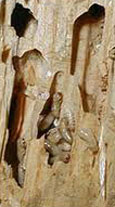
And that’s not to mention the more obvious, like the effects of termites and other realities often invisible.

Our physical and environmental sciences attest to the connectivity of all things, but won’t say much about the moral sphere, that being out of their realm. Our experience and history attest, however, that these different dimensions work in the same way. The difference is that outside of the human realm there is no rebellion, no action independently devised, no going against.

Untrue in the moral sphere in which we live. Here in the realm of intelligent thought and free will we’re faced with moral decisions on a daily and momentary basis. And there’s hardly need to remind that a great percentage of the time the wrong choice is made.

And when it happens, much good is destroyed.

The miracle is that everything is not destroyed. There seems to be a higher order . . . something we take for granted. We’ll call it “grace,” not very scientific, and too tame a term for such overarching effect. Somehow, in the midst of the fact that one sinner destroys much good, and there are multiplied millions of such being committed every moment, thus destroying all that much more good, the miracle is that we somehow go on.

For the while.

It’s a grace.


_______________

*Ecclesiastes 9:18b

Next: Occupational Hazards. Coming Thursday.

4 Comments

Addiction

September 27th, 2012

As no one is discharged in time of war, so wickedness will not release those who practice it.*

Okay, this is a metaphor.
You’re in the army and you’d like to get out,
but there’s a war and they won’t let you go . . .
so it is when wickedness takes over;
you won’t easily break free.

But “wickedness”? Is that word still around? Seems like it’s pretty much gone into disuse . . . like the overused theme of quicksand in early Hollywood movies. (Though the comparison works.)

Wickedness. No, no, no. We would rather use some euphemism like the dark side, and relegate the whole concept to non-reality, or to earlier times more naïve than our own.

It’s the stuff of stories, like when wickedness so pervaded the earth that heaven had no choice but to wipe it out and start again. Something about a world-wide flood with only a few spared in a boat.

Or sodomic cities consumed by a hail of brimstone due directly to wild and willful wickedness within.

Stories. Folklore of another world when righteousness mattered and its evil twin was punished. (Righteousness, another anachronism.)

It is curious how there is archeological evidence for both of these stories. But no matter; what do they have to do with me?

Except that I am a microcosm of the whole. Principles of nature that held then still hold now. Cause and effect is more than an interesting notion.

Jesus said it: He who sins is a slave to sin.** And there’s another word we don’t much use. Though the concept of slave we understand.

We understand it best when we’re subject to it.

Wickedness, a willful act, tentative at first and then, with the sky not falling, continued . . . exerting my God-given right to do whatever I want whenever I want. And that’s often, even if (or especially since) it’s not as fun as it was at first! Because I’m FREE! I’m not drowning (per world deluge); I’m not burned up (per fire and brimstone). Well, I may be a little singed emotionally, or socially, or physically . . . or all three. But, GD it, I’m free to do whatever I want,
and WHENEVER IT MAKES ME DO IT!

I’m free, I tell you. Free! Free!! Freeeeeeeeeeee . . . .

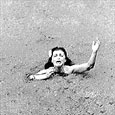
(The last word fades away, the quicksand slowly covers over and all is tranquil again.)

Cut!


_____________________

*  Ecclesiastes 8:8b
**John 8:34
Next: Termites of Good. Coming Monday.

10 Comments

Where There’s Life, There’s Hope

September 24th, 2012

Anyone who is among the living has hope–even a live dog is better off than a dead lion!*

It’s one of those statements of colorful pithiness that puts everything into perspective. I’m reminded of another, oft repeated by an old Irish friend, “Cheer up; you’ll soon be dead!”

How could one not be cheered by such bright advice on a Monday morning?

And about these metaphors; which do you identify with, the dog or the lion?

The lion here is the king of beasts, much revered, feared by all and fearing none. But the dog implied is not exactly the “best in show.” Rather this is the mangy, cowering, rib-showing, scrap-eating beast of shadows that no one owns and everyone kicks. It’s a contrast between the king and the cur. There is no comparison . . . except that one’s alive and one is dead.

Now which would you rather be?

For the dead it’s all over; for the living there’s still hope.

And hope keeps life alive.

You may be in debt, but you’re alive; you may come out of it.

You may be working a job you don’t love, but you’re alive; it may change.

You may be suffering from any number of ills, misfortunes, or runs of bad luck. But you’re still alive; there’s always hope.

Hope keeps life alive.

And being alive is such a precious thing that even the cur will fight (to the death) to keep it.

Too late for that for the lion.

So, even if you’ve only scraps of bread,
remember the words from that Irish head:
Cheer up [you dog],
you’ll soon be dead.

Arf!


___________________

*Ecclesiastes 9:4

Next: A Word about Addiction–Life’s Wrecker. Coming Thursday.

3 Comments

The End is Better than the Beginning

September 20th, 2012

Here’s one that should seem obvious but apparently needs pointing out. Here’s the Scripture:

The end of a matter is better than its beginning.*

The fact is, we like beginnings. We christen things. We have grand openings, congratulate each other. We celebrate birthdays. Anniversaries. Christmas.

It seems the beginning is the most optimistic moment of anything. In the mind’s eye it’s as good as completed, and perfectly executed. Being unencumbered by challenges and problems, I suggest celebrating right then . . . it’ll never be as pure and unsullied again.

Then comes the middle . . . the months, the years, the eons. That’s when reality sets in and nothing happens without work. Obstacles loom, doubts roar, vision wanes, fatigue sets in, enthusiasm falters, early supporters may now oppose, and new ideas seem better.

But a half finished chair is useless to anyone; so is a house only in drawings, or a journey aborted mid way. The list could go on forever.

It’s because of the difficulties in the middle that multiplied starts turn false. Its for overcoming opposition that completing ANYTHING deserves an applause! If completed WELL, a standing ovation!!

The end is the reason for the beginning. Something new now exists. In the process you’ve become bigger, maybe happier, wiser certainly.

The ends are the reason for the means.

Since this makes so much sense to us, it seems hardly worth mention in Scripture. Unless there’s also a lesson for faith. Like when the day of our death really is better than the day of our birth.

Or that Easter is better than Christmas.

Or that the end of the earth as we know it will somehow be better than Eden.

Take heart. Things may be hard in the middle, but it’s for the ends you’ve made beginnings.

And all will be better then.


___________________

*Ecclesiastes 7:8

Next: Where there’s Life, there’s Hope. Coming Monday.

8 Comments

Much Dreaming and Much Talk is of Little Use*

September 17th, 2012

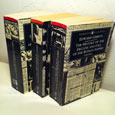
The Edward Gibbon classic on my shelf, 3000 pages of small print, published in 1776, before typewriters, while few knew he was doing it at all.

It’s a funny thing about our internal psyche, if it overhears a lot of our talking about doing something, it figures it’s already done.

And causes us to be satisfied with less than what we can be.

I remember a job I had where ideas were in high esteem. After creative sessions, my white board was so full of exuberant thought I requisitioned a new one that preserved the session with a photocopy. My legacy in that job? A fancy white board for the next guy.

I hope I left more than that, but as they say: When all is said in done, there’s more said than done.

What we need are examples like Edward Gibbon, writer the three-volume epic History of the Decline and Fall of the Roman Empire. After it was published, people remarked that they didn’t even know he had such an interest, not to mention the energy, and scope.

The virtue is not to never voice our plans. There is, in fact, a certain clarifying help in doing so. Rather it’s to be careful about only talking and only dreaming. The results of such activities dissipate into air. Only action is concrete.

To quote Sophocles: “Heaven never helps the man who will not act.”

Or Disraeli: “Action may not always bring happiness; but there is no happiness without action.”

Carlyle: “Our grand business is not to see what lies dimly at a distance, but to do what lies clearly at hand.”

Emerson: “Every noble activity makes room for itself.”

Or from our friend Anonymous: “Spare minutes are the gold-dust of time.”

It’s not what we say but what we do that shows who we are. “Talks a lot,” or “Dreams a lot” are not appellations that appeal.

Now, where was I before I started all this talking?


_____________________

*Ecclesiastes 5:7

Next: The End is Better than the Beginning. Coming Thursday.

11 Comments

Wisdom Better than a Lot Else, and Free for the Asking

September 14th, 2012

Here I am talking about wisdom again. It’s because Ecclesiastes, one of the great wisdom books of all time, brings us back to it often.

Among the things it says are:
Wisdom is better than strength . . .
Wisdom is better than weapons of war . . . 
Wisdom makes one wise man more powerful than ten rulers in a city.*

We get the idea, and could even supply others, like:

Wisdom is better than money, because by wisdom money is gained.

(Or saved.)

Wisdom is better than vision because one can imagine more than one can see.

Or, wisdom is better than beauty of face; it continues to grow and doesn’t fade. 

Wisdom, as I see it, is the sense of what to do and how to do it . . . which will be unique to every situation.

Everybody has wisdom in some measure (okay, not the fool); some have it in spades. Everyone, at moments, can use more, and the good thing is we can have more for the asking.**

I ask for it often.

I ask for it when I’m stuck. Often as not the situation I’m stuck in is of my own making. I ask, and it comes.

Wisdom is essential for the creative process. That process starts with some question, always the birth of a new thing. The question, clearly formed, describes the problem. Creativity then is merely problem solving, which is wisdom’s joyous work.

A prayer for creativity is a prayer for wisdom.

But back to our scripture: Why is wisdom better than strength? Because strength may falter, or may not be strong enough; but wisdom will find a way.

Why is it better than weapons of war? History is full of the larger army defeated by the smaller with wisdom on its side.

And why is one man with wisdom more powerful than ten rulers? Because he faces life as it is, not how he wishes it was. And he’s humble, not trying to change what he can’t.

Choose wisdom. Seek it. Sit at it’s feet.

The measure you have of it is the measure you’ll have of a whole lot else.

Put in your request.


________________

*  Ecclesiastes 9:16, 18, 7:19
**James 1:5

Next: Much Dreaming and Much Talk of Little Use. Coming Monday.

3 Comments