Musings on Being Age 69

December 6th, 2012

In “level state” in Mexico, this year

I’ve been realizing for some time that I’m in what I’m can only describe as a level state of contentment and happiness.

In many ways it’s been so all along; I’ve been happy mostly, and content.

Once, some years back, I told a friend, “I have everything I want, except the fulfillment of my goals.”

That seemed to be about as good as it gets, since a person needs to have goals, and a goal isn’t a goal if it’s already been met.

What I’m beginning to realize now, however, is the “level state,” a relaxation on even the goals.

Is this natural? Is it something that comes from being 69 years old . . . which seems like a very high number when inside I feel no different than when I was 39?

A 1-Day Mid-Life Crisis

But there is a difference, and that’s what I’m describing. I remember that year in particular, or rather one day of that year. That’s when I looked at my life and experienced a mid-life crisis that lasted one day.

Actually it was the day before I would turn 39 that it happened. I suddenly saw my 39th birthday approaching which meant it was only a year until I would turn 40. Forty seemed like the classic age by which something major should be accomplished, and I knew that one year would not be long enough to accomplish anything significant. I sensed panic, and despair. I experienced intensely what I’d heard and read others around this age experience, sometimes for a very long period, and sometimes manifesting in some very erratic actions. I suddenly understood it, and sympathized. It was no laughing matter.

By the end of the day, however, I began to regain equilibrium. I reminded myself that in fact I had done a few things, things big enough to have satisfied at least mid-level goals, and that time was not “up;” there would be years enough to get a few more things in. With that, I relaxed. My mid-life crisis, intense as it was, had lasted just one day.

That was 30 years ago. I suppose I could recount what I’ve been able to experience since then which I or somebody might call “significant.” But in fact that exercise doesn’t interest me much. We live in the present.

We live in the present

The difference between then and now, as I started out to say, is that now I’m not sensing any particular unmet goals. And I’m satisfied with that.

We have plans, to be sure, but generally not more than a few months out, or weeks. Every day I wake with a sense of focus for that day. There’s rarely—actually never—any down time. The hours are all full, and pretty much with what I want to do. We’re busy. And happy to be. It’s a gift of God.

Is this maturing of life beyond goals also a gift of God?

Don’t misinterpret; I know there are areas of my life that could go a lot farther. Areas of generativity, of perspective, of patience, and all the spiritual areas. And I’m interested in their pursuit. But these are not goals, per se, as they will never be met.

Why we work

Today I flipped open to a page of a book I’ve only flipped through before. On the cover is a label describing it as “The Number One Business Book of the Year!” The page I came to was about “the purpose of a business,” where the author says the purpose of owning a business is quite different from the purpose of the business itself. The purpose of a business is basically to acquire customers, to retain customers, and make a profit. But the reason for wanting to own a business, he says, is to create a lifestyle for oneself.*

And that’s when I saw clearly that the lifestyle I would create for myself is the one I’m living now. That is, the list of things that I want and the list of things I have are the same list.

This didn’t start out to be a meditation Ecclesiastes 11:8, but it fits:
However many years a man may live, let him enjoy them all.

Tomorrow I’ll share my list.

Feel free to comment.


___________________

*Making Money is Killing Your Business, by Chuck Blakeman

16 Comments

Confronting the 2nd Law

December 3rd, 2012

If a man is lazy, the rafters sag;
If his hands are idle, the house leaks.*

Some years ago I had occasion to return to a neighborhood of a childhood friend. The houses were a generation older now and a bit run down. The grounds were unkempt and there was all manner of clutter. I figured it was just the way it goes . . . it’s just the 2nd law of thermodynamics.

You’ll remember the first law, the one that states that nothing new is being created. (I don’t hear that one quoted so much these days and the word “created” is a political no-no in certain circles.)

But the second law, who could refute? The one that says all matter deteriorates, all energy runs down; things rust, die, go back to dust.

It’s an easily observable fact of life.

But as I continued on down the street I came across one house that stood out for its cleanness. It had good paint, a manicured yard, no clutter. It was the epitome of neatness, and all the more distinctive for the setting it was in.

What it spoke of was the people who lived inside.

I never saw them, or anybody else that day. But the difference between these neighbors was obvious. All the houses were old, all were built at the same time. For most, the second law was taking over, but the one that stood out as exception proved it didn’t have to be that way.

What was the difference? A decision to do something. A low tolerance for clutter. Somebody’s better self-esteem. In the end, it was energy . . . human energy . . . confronting the downward cycle and taking time for and expenditure on maintenance and renewal.

Three cheers for the maintenance man, the one who keeps things working, moving, looking good.

I’ve not just been in neighborhoods, but whole countries, where the maintenance man is not esteemed. Or he isn’t there. Or he’s sleeping late. Or waiting for someone else. Like the government. Or whatever.

In truth, what with the overwhelming forces of that 2nd thermodynamic law, it’s heartening that we have any influence on it at all. But we do.

That is, if we can overcome that same law within ourselves.


_____________
*Ecclesiastes 10:18

9 Comments

Little Birds and Whispered Words

November 30th, 2012

Do not revile the king even in your thoughts,
or curse the rich in your bedroom,
because a bird of the air may carry your words,
and a bird on the wing may report what you say.*

Where’d that bird come from? And where did it go?
I didn’t even notice it was here.
Just a bird.

That’s what the German Nazis should have been saying to themselves if they wanted to keep their secrets secret, stationed as they were in the frozen north of Norway. As it happened, WWII Germans used a system of anti-submarine nets to protect their bases from submarine attacks. The allies knew these nets existed but needed to know exact details on their location and at which depth they were. So… local ‘Sami’ people were used to ‘map’ these fjord defenses for the Norwegian resistance, who then passed on the info to the allies.

The point was that to the Germans these Sami were simple sub-humans in crude canoes trying to catch fish. The Nazi racial paradigm didn’t enable them to see anything serious in the primitive culture and practices of these people. But in reality the Sami were plumbing the fjords that they already knew so well, measuring depths and taking detailed notes in their head and by making notches on sticks, etc.

It’s funny to think of it, but the Nazis should have been reading Ecclesiastes 10:20.

But then, so should we.

We should know that there’s nothing hidden that won’t be revealed. We should know that we actually control very little. And we should know that attempts at damage control after the fact only make us look worse.

What’s inside always comes out . . . even our private thoughts. It’s best to do what Jesus recommended: Clean up the inside of the cup, then there’s nothing to worry about how the outside looks.

And we won’t have to worry about those little birds
carrying our words
where we’d rather they not be heard.


_____________________
*Ecclesiastes 10:20

5 Comments

Crime’s Real Price

November 26th, 2012

Extortion turns a wise person into a fool,
and a bribe corrupts the heart.*

As I write this I’m in a courthouse, awaiting possible call as a juror. I have mixed feelings about it all. Of course if it was me on trial, I’d want someone as level-headed and pure-hearted as myself. (Then again, I might want someone as merciful as possible, and altogether benign.)

If truth be known, I’d just as soon not be here . . . if nobody minds . . . and let this privilege go to someone else.

Meantime, while I sit here waiting, in another room others are also waiting . . . to hear their cases tried. Who know for what? Could be for the subject of today’s Ecclesiastical warning, extortion and bribes.

Extortion: The crime of obtaining money or some other thing of value by the abuse of one’s office or authority.

Bribe: Something such as money or favor, offered or given to a person in a position to influence that person’s views or conduct.

Okay, Your Honor, I understand. And I understand that these things are against the law and do harm to other people taken advantage of.

But, I tell myself, that’s not the reason Ecclesiastes warns against them. Rather it’s because of their damage against myself, whether or not I’m hauled into court. And, whether I’m the briber or the bribed!

Convicted in court or not, all my level-headed wisdom goes down the drain, as well as any vestige of pure heart.

Here’s the irony: Extortion and bribes are committed because one cares first about himself . . . but if one truly cares about himself he stays far from even the hint of these things.

Desperately trying to win, he loses. And not just because he eventually winds up in jail . . . but for what he’s become in the process: A self-justifying, mind-writhing, fogged-vision fool.

Not the way we want to live . . . in jail or out.

Meantime, I sit here in this witness-selection area awaiting my own verdict . . . of whether I will be chosen to judge another.

Contemplating sin’s true penalty, measuring my own heart.

I plead for mercy.


_____________________

*Ecclesiastes 7:7

3 Comments

Irony Happens

November 19th, 2012

Here’s an irony, the likes of which Ecclesiastes gets it reputation:

In this meaningless life of mine I have seen both of these: a righteous man perishing in his righteousness, and a wicked man living long in his wickedness.*

I can just picture the old man, having seen so much that’s wrong with the world he just wags his head, eyes down, his long gray beard swishing across his chest. He’s seen so much that doesn’t compute, in the end it all just seems meaningless.

The fact is, however, it’s not the end.

Every life only sees a segment of the middle. In the end it all comes together, if we could live long enough to see it.

This is irony: Life’s rules would predict one thing but then the opposite happens. It’s so common I’ve sometimes thought life’s not just full of irony, LIFE IS IRONY.

Seeing that it’s part of life at least provides a sense of detachment . . . and the wry smile that keeps us from going crazy.

One of the things I like about Ecclesiastes is that it observes the world as it is, not how we think it should be. That’s true wisdom.

It could also be true cynicism (something Ecclesiastes is often misunderstood as expounding). But a cynical view is not the whole picture either. True wisdom looks beyond even that.

And faith, farther still.

Note what shortly follows:

Although a wicked man commits a hundred crimes and still lives a long time, I know that it will go better with God-fearing men who are reverent before God.**

That’s faith: When I see one thing but know another. When I accept that the facts are not all in, that the total picture is not yet finished.

So, when I see things that don’t make sense, when irony almost seems the rule instead of the exception, I have to know that there’s a bigger story . . . that I’m only seeing some section in the middle.

My vision may be limited, but my faith need not be.

When irony happens, just smile.

The bigger picture is still being painted.


_____________

*  Ecclesiastes 7:15
**Ecclesiastes 8:15 ff


10 Comments

The Good Old Days (Not)

November 16th, 2012

Memory, it seems, is selective. It’s easy to think the good old days were somehow better. But did we think so when we lived them? Were those days not as full of preoccupation with the future and roller-coastered with the present as now?

It’s noteworthy that the writer in Ecclesiastes remarked on this for two reasons: (1) that he saw it, and (2) that he saw it so long ago.

Here’s the quote:

“Do not say, ‘Why were the old days better than these?’ For it is not wise to ask such questions.”

When, exactly, were these words written? If Solomon wrote them, that would be around 900 BC, during the golden age of Hebrew national ascendency . . . a strange time to be considering earlier days as better.

Or, as factors imply, they were written about 400 years later, after national captivity, then the early days really were better.

Either way, it’s useless to stew on it.

We ourselves could yearn for simpler times, like before sliced bread, or refrigeration, hot showers, air-conditioning or central heating.

Or politically, like when members of the opposite party were burned at the stake after election and then reversed again the next time.

Or the romance of wilderness living that was wonderfully wild and animal threats were frequent and not just due to a zoo escape.

Or when a chronic headache was dealt with by some doctor boring holes in the skull to let off pressure.

And the dentist used all manner of dull contraption to deal with decay, before Novocaine.

When the average life span was 35 years.

And remember the wonderful plague years.

On the positive side, what about the nostalgic “Salad Days,” an expression I’ve never understood, but somehow conjuring things light and green with relish and lovely dressing. Nice, but just as fleeting.

Note that the writer doesn’t say whether the early days were better or not, just that it’s futile to consider it.

Why? BECAUSE WE LIVE IN THE PRESENT!

THESE are the days of our lives . . . to make of them what we can. And in the future it’ll be just as futile to look back on these as better.

Have a good day.


_______________________

* Ecclesiastes 7:10

For a good day this weekend, don’t forget our annual open house. Click here for details: House Show 11’12

6 Comments

The Race Not to the Swift

November 12th, 2012

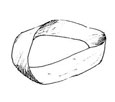
The non-winning “best” painting. Click for large view.
Speaking of ironies, here’s one often repeated, particularly when we think we were the one that should have won but didn’t.

Here’s the full passage:

The race is not to the swift
or the battle to the strong,
nor does food come to the wise
or wealth to the brilliant
or favor to the learned,
but time and chance happen to them all.*

Once I participated in a “Quick Draw” competition. That’s where artists work against the clock to make a painting. Most went off and did a landscape; I, and about a dozen others, chose to do a figure study—a draped model. We had two hours. As painting is solitary work, few of us knew how anyone else was doing. When time was up, it was apparent to just about everyone that mine turned out the superior work. I was grateful, particularly as I’d not been so confident in the process; but it had come together in the end.

When the judging was announced, one of the other figure painters was awarded third prize. I’d seen the painting. Pretty poor, I thought, so I began to mentally prepare my acceptance speech. The second prize was awarded to a landscape painter. By then, with just one left, I was really ready to accept my prize. But, to my chagrin, the first prize went to another landscaper.

Refreshments followed. I had humble pie.

I was consoled as when people saw my painting many said, “That one should have won.” That, in fact, became my reward. I realized it was better to not have won but to be reputed as the real winner than to have won, with a general murmuring that I shouldn’t have.

Two years later I entered the same competition. That time I did not paint the best painting . . . and I did not win. So that approach doesn’t work either.

Here’s the teaching: We can’t control outcomes. While the prize is usually to the best, there are always more complexities at work. We might call it luck, good and bad. Or as Qohelet calls it, “time and chance.”

Time we understand. The right solution at the wrong time is not the right solution. But chance? Where does that come in? We thought it was an ordered universe with predictable outcomes. Without that how would science be science, and mathematics the purest system?

Obviously there’s always more than meets the eye.

Survival isn’t always to the fittest.

And when we’re not always in that category, “time and chance” is another thing we can be grateful for.


___________________

*Ecclesiastes 9:11

For more art, and friendship, come to our annual open house. It’s this coming weekend. Click here for details: House Show 11’12

12 Comments

Conflict of Patience and Pride

November 8th, 2012

The eternal connection of the mobius strip

Here’s another from the Ecclesiastical Rubik’s Cube:
Patience is better than pride.*

Okay. Sounds true. But what’s the connection? We might just as well say, “A bowl of ice cream is better than a bucket of tar.” They’re not connected.

So what is it about patience and pride that links them together?

Except that they’re opposites.

Note:

Pride doesn’t see the whole picture but forges ahead anyway.
Patience doesn’t see the whole picture either, but it knows it doesn’t.

Pride considers no weakness, brooks no compromise, sees no obstacle.
Patience understands weakness, that it’s a human condition.

Pride slows for nothing.
Patience does not hurry.

Pride has no patience with patience.
Patience has patience even with the proud.

Between them there’s a continuous loop, a mobius strip: Patience fights pride fights patience fights pride and on an on until one prevails . . .
at least for awhile.

Even in movies it’s a common plot: The progenitor who is proud is always brought low while the humble, in the end, is raised up.

I’ve always been glad for those who have shown patience with me (including when I’ve been proud).


_________________

*  Ecclesiastes 7:8b (see also James 4:6)

Next: The Race Not to the Swift. Coming Monday.

9 Comments

Avoid Extremes

November 5th, 2012

Here’s another gem/conundrum from our writer of ecclesiastical wisdom:

Do not be overrighteous, neither be overwise—
why destroy yourself?

What? Isn’t being good the best way to be, and wise the wisest? Can one go over the top and make things worse?

Here’s more:

Do not be overwicked, and do not be a fool—
why die before your time?

What? Is the Bible implying that a little wickedness is okay, at least if it doesn’t threaten early death?

Here’s the summary:

It is good to grasp the one and not let go of the other.
The man who fears God will avoid all extremes.*

Ah, it’s the extremes that are to be avoided . . . on both sides of the equation. Come to think of it, I have seen examples.

Some decades back I was in an adult Bible class where a guest stated his belief that it’s possible for a person to achieve a state of ongoing sinlessness. It was clear he was using himself as a prime example. The teacher, either by dint of different theology or a knowing perception of human nature, took umbrage with it all and said, “Sir, you are sinning right now!”

I don’t remember what followed, only that afterward the teacher was removed. Apparently for a lack of diplomacy.

Which one, I ask myself, was acting overrighteous?

Here’s another, illustrating the other side: A friend once told me how he’d been working on a movie set and had been told not to make waves. In time he discovered that the director was embezzling. He reported it to higher management and he, my friend, was promptly chastized for making waves.

Strange, but apparently for them a little wickedness was less hassle than too much righteousness.

As for the “overrighteous,” I’ve never known a true perfectionist to be either realistic or happy. One only destroys oneself.

As for “overwicked,” it’s easy to see how the big wrongs will kill us; but we might as well admit that we all live with little wrongs all the time. (And even they eat away at us until they’re mastered.)

In any case, it’s moderation that’s prescribed, and balance.

You can die from either, gluttony or anorexia. Same in all areas.

The man who fears God will avoid all extremes.


______________________

*Ecclesiastes 7:16-18

Next: About Patience. Coming Thursday.

10 Comments

A Prayer and a Response

October 29th, 2012

The solitary beach inviting lots of conversations heavenward.

Here’s a risk, talking to you this way. But why not? Lately we were in Baja California for an art-making trip. It was a great venue and a great experience (some of which I’ll share on the next e-gallery). But for the first three days, nothing was coming. After several aborted attempts at something new, and several long walks on the beach, I wrote the following prayer. Then, in an attitude of expecting an answer, I wrote what came back to me. Both are recorded below. They’re very personal, but then, I am a person. And they are very blunt, but God already knows my thoughts so I might as well voice them. Take them–the prayer and the answer–for what they’re worth. (They were worth a lot to me.)

Lord, Hi,
It was great gleaning insights of you on earth in today’s reading . . . a high point of the day. And an enjoyable day, overall. But the painting is not going well. It’s acrylic, not oil, for the trip. Anne says she’s not doing as well as hoped either. I’ve appealed to you. Apparently you don’t care. These things are not the important things. But then, when they are important, you’re just as not there. So, all this is just practice in disappointment. Sorry. But what should we do? We’ve prayed. We’ve worked. We’ve thought, talked, taken breaks, looked at the work of others. Everything in this place and time is right. And, at least for me, I don’t have any anxiety about having to perform. If it doesn’t come, so be it. Yet, I’m asking, and have asked. What do you have to say, if anything?
Hyatt

Hyatt,
Be at peace. Since when is creation easy? You’re getting back exactly what you’re putting in. You’re not working . . . not really. You think it’s deftness that does it, and luck. It’s not automatic writing. Think! Work to make one good piece. Don’t think about production. Go slow. It’s the way to quality. Make one good piece.
Love,
Your Father

Happily, the next day new work began to flow and, before we left, I’d produced ten pieces and Anne finished 20 . . . with more “give and take” prayers following. All heartening. We’re grateful.

Again, see “e-gallery,” coming Thursday.

18 Comments