Dad’s Story, Part 1

April 27th, 2014

Here’s the first of a short series recounting the life of my father. He wrote it at the request of family reunion organizers a decade ago. The photos are from various albums that have come into my possession. Enjoy this, if for nothing else, the times they lived in and the contrast to ours.
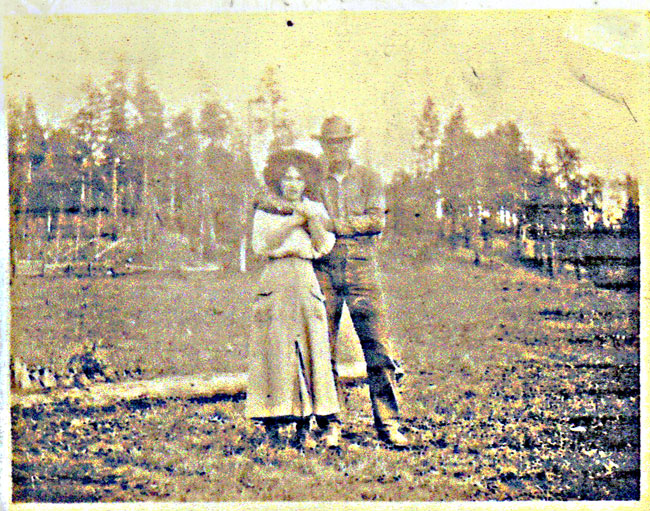
Hyatt-Moore-1-Madge-Comer

Here’s a photo I’d never seen that just fell out of one of the albums. It’s captioned “Madge Comer and Hyatt Moore when they first met.” That will be my dad’s father and mother. I love it because it’s one of the few that’s not posed in a photographer’s studio, when they were young, rugged, and ready.

I was born in McPherson, Kansas, September 20, 1916 to parents Hyatt Edwin Moore and Margarite Diadame (Comer) Moore. My older brother Comer Edwin Moore was born in Provo, Utah two years before me.

My first recollection is from the time we moved to the homestead 50 miles outside the nearest town of Rawlins, Wyoming. I must have been about 2 because my younger brother Sterling had not been born and he was two years younger than me.

First we “camped out” on the Miller Ranch nearby while Dad cut native logs, hauled them in, and built a one-room house for us. Meantime, the Miller cabin we were using reeked, having been used to dip sheep. It was open to the weather and leaked when it rained. It must have been very hard for Mother.

I learned later that this was the second attempt at homesteading. The first homestead was in Colorado using Dad’s name, while he was a fireman on the railroad. He lost that job and the homestead.

In Rawlins Dad got a job as brakeman on the Union Pacific Railroad. He used the name of Henry and applied for the homestead under Mother’s name. They had a choice of several locations and picked the best, 640 acres with running water up against the Seminoe Mountains.

They had little money and no steady job so this was all they could do.
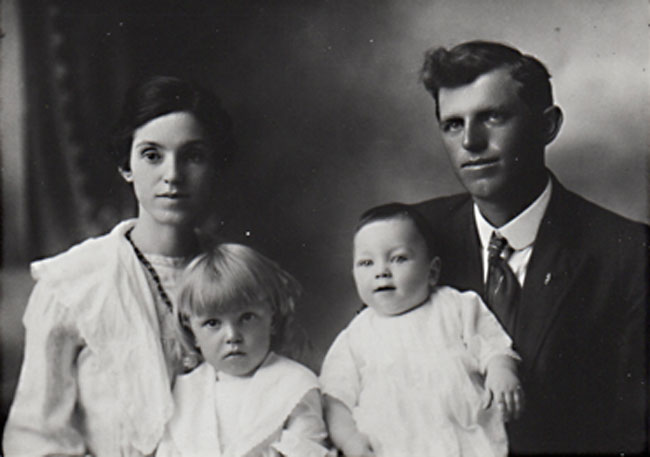
Dad-at-1

Here’s already good-natured Dad at about 1 year, with older brother, mother and Hyatt the First.

I do not remember the first trip to the homestead but we probably moved with a horse and wagon, as the horse was necessary to bring logs to build the house. My dad was on the extra board, out of work for most of the summer, so this is when we moved.

(Next: An early Christmas, a cigar-smoking Santa, and attempts at wilderness schooling.)
8 Comments

Goodbye House

April 26th, 2014

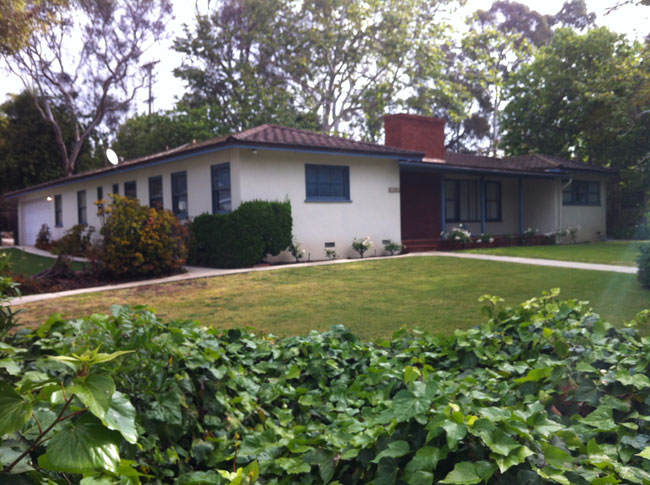
Corner-of-house

The corner window has particular memories for me, just over my bed, a sometimes egress for midnight escapades with friends.

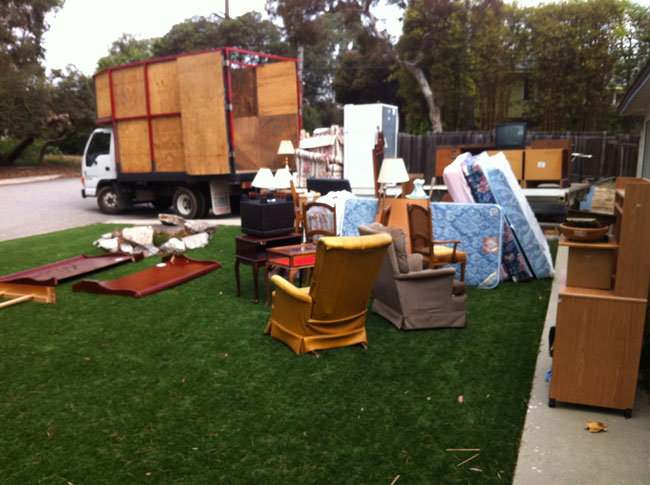
It’s the end of an era. This house, when my Dad bought it in 1955, marked a new beginning for all of us. I was 12. The house was as big as all California, moving as we were from bricked-in Milwaukee. But now, with Dad gone and Mom shortly before, both dying there per their wishes, the house is being sold. Yesterday we went up to Palos Verdes for virtually the last time for the final clear out.

All the siblings had traveled in and gone through the house earlier, picking out what might be still useful, claiming things for memories. Years before my mother suggested that we choose what we’d like. All five of us had our eyes on the old rocking chair. I don’t remember who got it in the end. But yesterday was for what was left, everything being donated to a thrift shop connected to a men’s ministry we know. I think the folks would be pleased.

Stuff-on-Lawn

It all looks rather forlorn here, but every piece of furniture, if it could talk, would tell stories, both of the owners and many, many friends.

I’m reminded of This Old House that Rosemary Clooney sang back when I was just becoming aware of radio:

This ole house once knew his children
This ole house once knew his wife
This ole house was home and comfort
As they fought the storms of life
This old house once rang with laughter
This old house heard many shouts
Now he trembles in the darkness
When the lightnin’ walks about

CHORUS:
Ain’t a-gonna need this house no longer
Ain’t a-gonna need this house no more
Ain’t got time to fix the shingles
Ain’t got time to fix the floor
Ain’t got time to oil the hinges
Nor to mend the windowpane
Ain’t a-gonna need this house no longer
He’s a-gettin’ ready to meet the saints

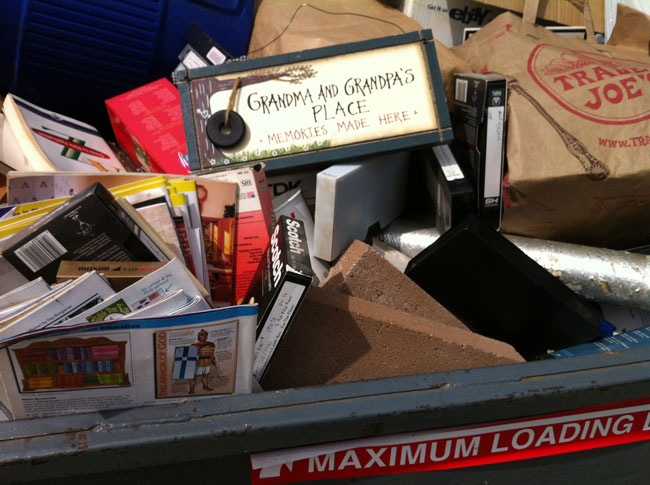
Memories-made-here

Couldn’t resist this photo as we left the house for the last time and looked back at the dumpster in the driveway. The “junk” is gone, but the memories will fade very slowly.

And so it goes. The metaphor’s for the body, both Dad and Mom having now given up theirs, the need for anything else long gone.

Happily it’s a new house for another family. The buyers have long been friends of my parents. As a tribute to them they offered more than the asking price, and they’re already making plans for restoration and expansion. As I see it, it’s all part of God’s continued blessing on my parents’ lives.

The house is gone, but memories continue. The next series of blogs will be a brief history of my father’s life, in his words, in short increments, with a few photos. It’ll be with more frequency than these blogs have been coming.

It seems only right. Who of us would not wish for at least some continuing tribute? And his life, as you’ll see, is worth getting to know. We’ll start tomorrow.

23 Comments

A Season of Superlatives

April 18th, 2014

TLS-in-situ

A canvas print as used by San Clemente Presbyterian Church in their “Stations of the Cross.”

It’s a season full of superlatives. It’s when the best man in history was cut down by the worst act of treachery and suffered the most abjectly degrading death after humanity’s most scandalous trial. It happened on the darkest day and ended with the highest prayer.

“Father forgive them.”

Find our language’s most extreme terms, those describing highest grandeur and those most wretched; they all meet together that day.

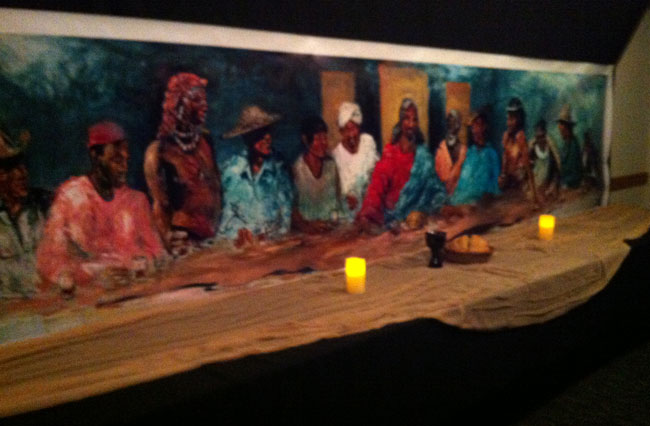
It started with a supper, the one since labeled, the last.

I depicted it some years ago, taking liberties with Da Vinci’s, and to make another point, replacing the disciples with tribal people. My father, who in his last years carried bookmarks of the image and gave them to everyone, named it the next.

Then he’d always say, “If you believe, you’ll be there.”

Every year for the last several, Anne and I have observed our own tradition of a personal sunrise service on Easter. It’s not necessarily sunrise, but it’s early. While many who don’t normally attend, throng to church that day, we who habitually do, head the other way.

Casper’s is a wilderness park nearby, with high hills and even a sitting bench at the top of one. There we commune, not with nature, but in it.

Among other things, we commemorate the superlatives. The greatest God came to lowest depths and ascended back again . . . Himself somehow made anew and bringing us along. And, as Dad said, “If you believe, you’ll be there.”

Superlatives? Words cannot describe.

The greatest debt now freely paid.
The best offer ever made.

Happy Easter.


24 Comments

Day in the Desert

April 14th, 2014

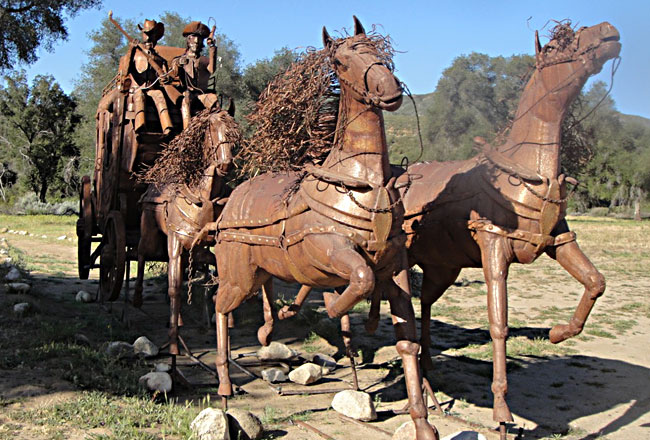
Stage-650

Couldn’t resist using this, some sculptor’s creative efforts, encountered on a past DID on the drive out. (Any resemblance with me and Mike is strictly coincidental.)

Tomorrow I’ll be in the desert with my friend, Mike. It’s something we’ve done every spring for 20 years now and is one of the things that keeps our friendship alive.

Another is to meet for coffee every week for conversation. It can be any topic, at any depth, sometimes very deep, and sometimes with so much laugher people start to stare. If there’s pain, it’s shared; if there are triumphs, each of us is the other’s greatest fan; if some exhortation is in order, some challenge, these are welcome too.

Then our day in the desert is all that, extended, so there’s plenty of time.

Abbreviated, it’s the DID, as in “Tomorrow we’ll do the DID” and “We’ve done the DID now nineteen times running.”

Actually we walk. Sometimes for long treks, sometimes shorter. The Anza Borrego Desert is a place of wonder and quiet, amazing in so many ways, not the least because it’s just a couple hours from some five million people. We rarely see another soul.

Mike’s a naturalist, a sometimes collector of seeds for his native plants nursery,* knows the names of all growing things, about the legendary stage coach stops, and has an eye for any petroglyphs or Indian grinding rocks. We always pack a lunch, bring cameras, maybe a sketchbook, a dog-eared Bible for a mid-day bite of the better food. There are periods of talk, periods of non-talk, sometimes even a brief nap on a hard rock if that’s the need.

Mike has a topographic map, detailed with all the trails and peaks and washes. Every year he marks where we are; and it’s well marked now where we’ve been.

In 20 years, with one long conversation, continued every week for an hour and a half, and every year for a full day, we’ve been a lot of places.

And the destination, of course, is in the going.


__________
*Tree Of Life Nursery, Ortega Highway, San Juan Capistrano


10 Comments

Ready or Not

April 6th, 2014

Denny-115
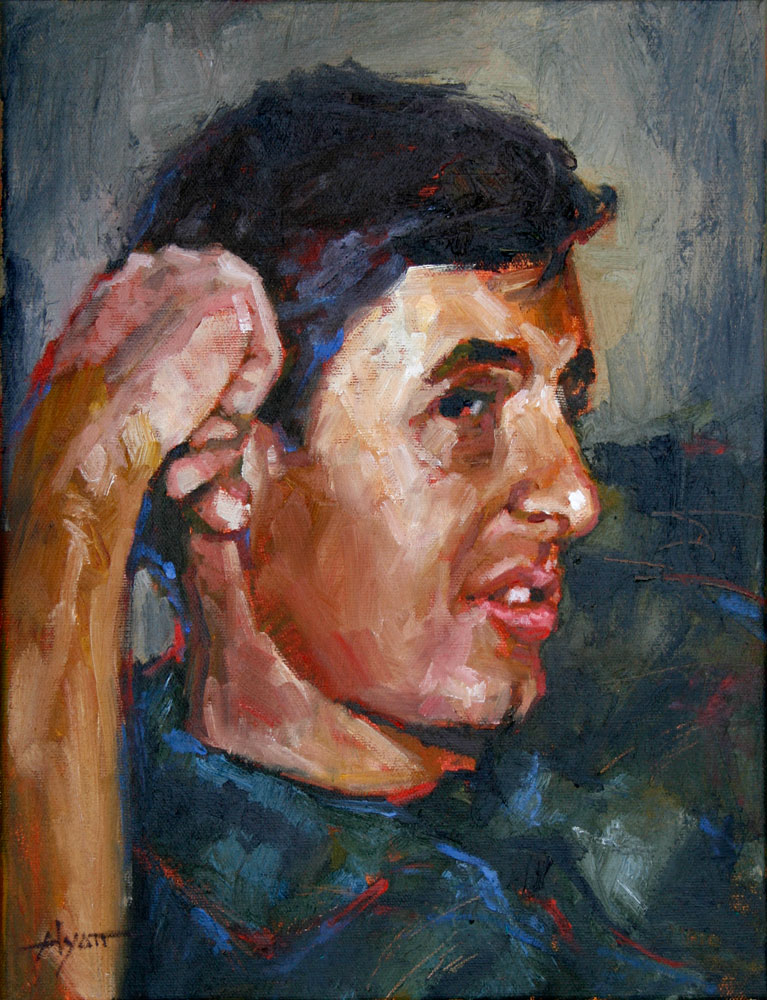
Denny, my painting from a photo of him somewhere in mid-life. (Click it)

My last Blank Slate announced the death of my father. I’ve been grateful for all the comments that followed. The memorial service honored him richly. Happily I had prepared a list of his praises some years before and read them at his 70th wedding anniversary. I always think it’s too bad a person can’t hear his own eulogy, so I made sure he knew at least my sentiments back then.

Though my dad was ready to go and we were ready for him to, tragically we experienced another death right in the midst of it all. Denny was the husband of one of Anne’s closest friends, a man in good health, good spirits and with no warning signs. He went to the hospital for something supposedly minor and never came out. We’re all still in shock; his family, still numb.

The funeral was on a golf course, on links he’d played just two weeks before. After bagpipes and taps and military honors, a close friend spoke, then each of his three adult children, followed by his wife. Some of his golfing friends said later it was the most meaningful funeral they’d ever experienced, particularly with the remarks from the family.

At a reception afterward, others were given opportunity to relate some remembrance. Through it all we came to realize how narrow had been our particular perspective of this very expansive man.

Both funerals illustrated those seemingly stark scriptures, It is better to go into the house of mourning than to go to a house of feasting, and the day of death is better than the day of birth.*

Both men left legacy. Both lived honorably. Both left family . . . unique human beings that would not be here otherwise. And both modeled an integrity for others to follow.

But here was a major difference. In the case of my father, at 97, alone, his faculties wearing completely out, he was ready. For Denny it was different. Just 70, a recently retired medical doctor, he had lots of living still in him. Whether he was ready, we don’t know. We know we weren’t.

Another from Ecclesiastes: Death is the destiny of every man, the living should take this to heart.*

I’ve sometimes thought we should start each day with, “If this were my last what would I do, what would I not, what would I say, and to whom?”

It’s not for morbidity; it’s for preparedness.

After that, have a nice day.


______________________
*Ecclesiastes 7:2,1

8 Comments

Dad Died

March 16th, 2014

Dad-and-Family-650

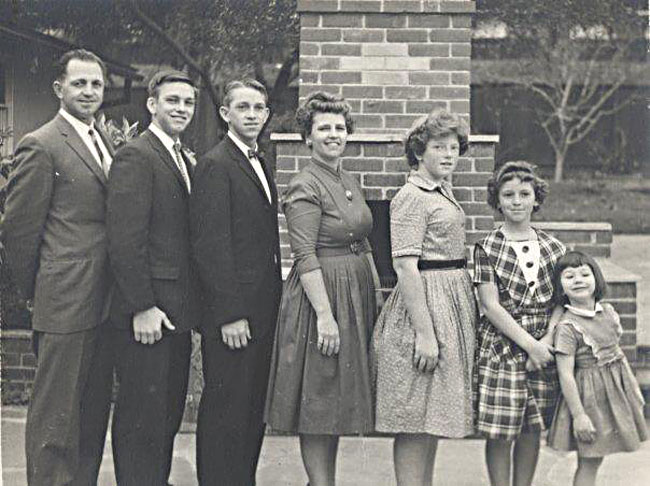
The family, circa 1961, Dad, me, Steve, Mom, Lynnel, Sue, and Lori. Cropped off is the feet. Dad’s shoes were about size seventy-five.

My dad died last night. It had been coming . . . really ever since Mom died in November. This seems like Part 2 of a two-part event.

Of course, I’m grateful for the sympathy of friends, but grief is not the sensation of the moment. It’s more of a reflection, a look at a life well lived, a perspective of my own from here out.

Dad hadn’t been talking much in these last months, toward the end not at all. On our last visit all he did was hold out his hand—to me, and then to Anne. At 97, I was impressed with the strength of his grip.

There’s much I could say of this man I not only loved but deeply respected. From him I learned many things. Not that his teaching was so overt, but there was a solid modeling . . . of what a man is and does.

For one thing, he wasn’t afraid to take things on. He could fix things, or make things. He had an expressed attitude that said, “These things (whatever they were) are man made; I am a man, I too can make them / fix them / do them.

It was far into my adulthood before I realized I could call a repair man or take my car to a shop. Dad always did these things himself. And very often for others.

He got a lot done but was never in a hurry.

He introduced me to fishing. In his great patience and “thinking about it” he could catch even when nobody else was. That wasn’t the same with me, so it didn’t stick.

He taught me to ride a motorcycle, out in the wilds of Wyoming, something he probably lamented as, at 14, I got caught doing it in Southern California traffic.

He taught me the value of friendliness, again by modeling. Same with family leadership. And of working two jobs if necessary to support his family, as well as explore a new interest.

He tried teaching me the facts of life, but shy about these things, waited too long. (The world teaches early.)

It was him that influenced me to read a certain book that in the end, brought me to God. For this I have him to thank for both of my lives, the earthly and the eternal.

On that note I’ll stop. It’s another reason that any grief we have is of a different sort than that of those without hope. I know I’ll see him again.

We’ll talk.

And I know his grip will be strong.

59 Comments

Assume the Title

March 11th, 2014

Once, in early days, someone said of me, “He’s an artist,” and I demurred. Why? I was embarrassed. I knew I wasn’t a very good artist, so I shunned the title. But in shunning the title, I may have been hampering my own progress toward becoming what I secretly thought would be great.

This inhibition is one of the things that holds us back. Because we’re not already “it,” we hesitate to identify with the new interest and we can stop there.

Face it, you have a number of gifts and multiple interests; what’s the harm in owning one more?

Okay, there is a certain level society will expect of us. A person can’t go around saying he’s a medical doctor just because he may have an interest in health. And you can’t boast of being a reader when the extent of your reading is The TV Guide.

Then again, if you can drive, you’re a driver; if you’re teaching, you’re a teacher; if you work, you’re a worker.

It’s the verb that defines the noun.

Emily Dickinson never published a poem, Vincent Van Gogh never sold a painting. Was Emily a poet? Was Vincent a painter?

Okay, one of Van Gogh’s pieces sold before his death, and of Emily’s 1800 poems, 11 were published in her lifetime. But the point’s the same, each was doing their craft and had well earned their titles whether or not anybody else knew it at the time.

So, forget the false humility. Whatever you’re doing, that’s what you are. And the more you own up to it, the more you’ll do it.

If not, the loss is yours . . . and the rest of ours.

So, fill in the blank, “I am a ____________.”

Now, back to work.

8 Comments

Teach

March 4th, 2014

Teachers
“I only know that I know nothing at all.” So said Socrates, and yet, what a teacher.

For some time I looked for just the right teacher to help me at my particular state of need and, not finding one, decided to become one. Now I am always learning at precisely my level.

We hesitate because we know how our teachers have always known more than us. But, however little we know, there are always some who know less. And they may well appreciate our openness to share it.

A teacher knows a few things about his subject, of course, but more, it’s his enthusiasm for it that most enlightens others.

The art of teaching is, as much as anything, the art of suggesting. The student own imagination will take it from there.

And s/he’ll thank you for a long time to come.

But there is a honing for the teacher himself. Clarifying one’s own thoughts is one major benefit, that and organizing them. Then filling in the gaps where knowledge is still lacking is another. The teacher is always the student first.

Then, encountering new challenges in the process is another, the having to respond to questions you’ve not even countenanced yourself. All these things sharpen. And you may come to realize you know more than you thought you did, or at least at this moment are ready to receive.

It becomes almost incidental that you’re teaching others, when you’re learning so much yourself.

The learnable content of any subject is an infinite horizon. The best way to approach it, after you’ve garnered a few things, is to begin to teach.

It’s a way to define and devise your own curriculum, and you’ll find the teacher you’ve been looking for is you.


________
FYI, I’m teaching mid-level painters in three venues this week.
A six-week evening class beginning Thursday evening.
A two-day workshop next weekend.
On-going coaching in my studio Mondays and Saturdays.
For info on any of these, e-mail me at moore@hyattmoore.com.

2 Comments

Watering the Mind

February 23rd, 2014

Rainy-Street-Orange-Coat-115
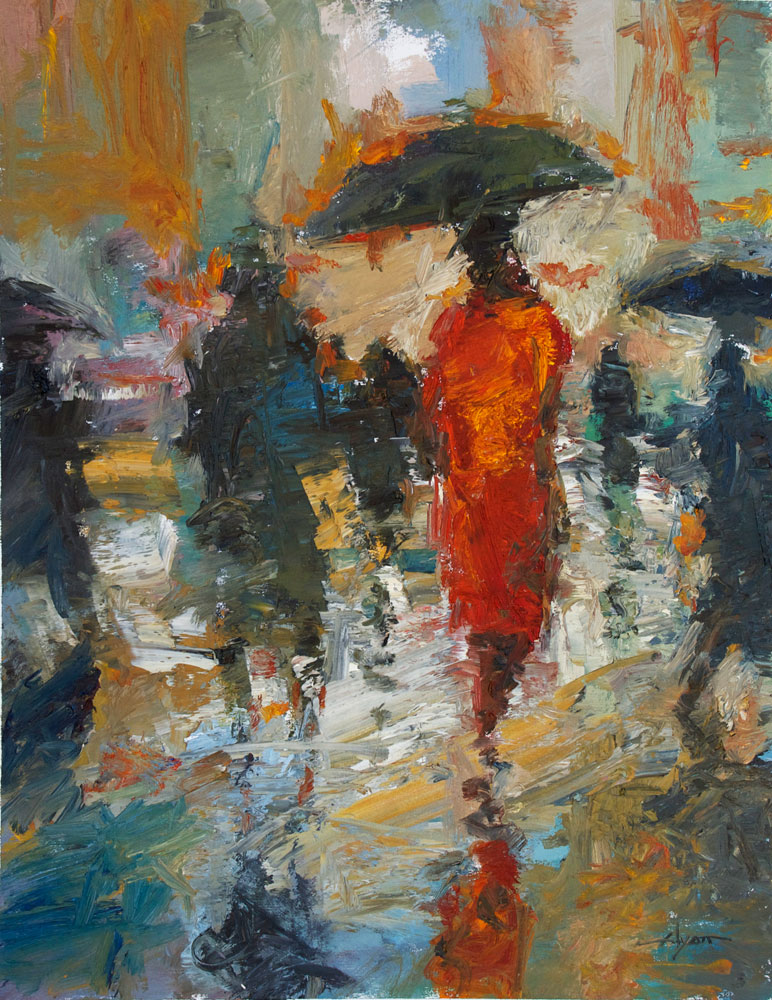
From a painting not done on this trip, but it fits here. Click it for larger view.

Here in Oregon we’ve had a fairly simple routine. We rise in the still-gray mornings for time with our own minds. Then Anne is upstairs for art, me down, at computer, joining her afternoons. At some point each day we go off for a walk. Often a light rain is falling, but we only use the umbrella sparingly, not wanting to look too much like foreigners.

We find ourselves enjoying the watering of our minds as much as we enjoy the drizzle outside. This year as last, we’ve listened to a 36-lecture overview of The Italian Renaissance as background while doing art. In the evenings it’s Downton Abbey for entertainment (last year, it was Foyles War for the second time).

We have our books. At page 120, I’m a tenth of the way into The Rise and Fall of the Third Reich. Instructive, really, of how things can go, and did.

Anne finished A Million Miles in a Thousand Years by Donald Miller, an enjoyable book she also read from to me in the car. She’s now into Caleb’s Crossing, a novel.

I’m also dipping out of What if Jesus Had Never Been Born? with so much of how and why this culture developed so different than others.

Morning and Evening is a book of Charles Spurgeon meditations I found on my mother’s bookshelf. I’m reading it for her sake, and mine.

There’s also a pithy little book found on a give-away shelf called New Creation Realities, a pulsating massage shower of reminders of who we are, or can be.

Then there’s the Bible itself, the Gospel of Mark, Psalms, or wherever; Anne is reading through the New Testament.

If our friend Adolf Hitler, who was a great reader in his earlier days, had meditated more along these lines it would have saved the world a good deal of trouble.

But most of our time has been spent at our crafts. Anne has been highly productive, doing finish work on scores of pieces started earlier. The walls here are fairly covered with her exquisite works.

I’ve been able to keep to a routine of a chapter drafted in the morning and a painting painted in the afternoon.

As a bonus, yesterday we approached a very fine gallery near here and they accepted ten pieces from each of us.*

Just a few more days and we’ll be on the road again, back to the land of sun, and the abundance of all things.

Either way, we’re grateful.


_______________________
*More about that in the next “e-gallery.”


10 Comments

Stuck

February 19th, 2014

We’re still in Oregon. Winter and rainy. On the way up, the wind was so strong a tree fell across the road, completely blocking progress in both directions. It had just happened, three cars ahead of us. Everybody stopped and waited. “For what?” I thought, and inched on.

A high-axle 4-wheel drive truck came over from the other side. I thought about trying same, but knew our van would never make it. What about the shoulder? I could conceivably go off the road, around the tree, and even make a path for others. What could I do but try?

But, alas, the mulchy gutter had only looked solid. Half way through we were bottomed out to the frame, the wheels just spinning in the mud.

I was stuck.

“Stuck,” an English word I’m told they’ve adopted in the Papua New Guinea tribe I just visited. They just like the sound, brief and strong, soft at the beginning, hard-edged at the end. So final.

But it seldom is. Almost always it’s only temporary. Something’s been tried, it’s not working, you’re stymied for a moment or an hour, or maybe much longer. But if you’re stuck and you know it, there will be a way.

In the end, at the tree-fallen road, a man appeared with a chain saw. By then there was a long line of cars in both directions. Some people, now out of their cars, gawked. The woodsman would clear a path . . . but, I realized, not for me, still off in the ditch.

Finally I called out, “Hey, come help push us out of this.” And they did, seemingly surprised that they could. A few moments later we drove free, in a very mud-splattered car, waving behind our thanks.

After that we had the whole road to ourselves for many miles.

There have been other times I’ve been stuck, though not that many, in spite of what Anne says.

There was the time, during my high school years, driving alone in my parents’ station wagon, in territory I didn’t belong, and found myself hopelessly bogged down in a sand lot. But it was Easter week, and a whole gang of student carousers saw my plight, gathered around and with a big laugh, lifted that behemoth Plymouth right off the ground and back out to the street. Incredible.

There’s always a solution.

Anne said, “You’ve got more ‘getting stuck’ stories than anyone I know.”

I’m not sure that’s true, but instead of going on the defensive I told her I’d take it as a compliment.

“At least I’m forward moving.”

One can’t always sit and wait, wringing hands and wondering. You try things. You sometimes get stuck, but not always.

And even when you do, there’s usually someone to help.

So move. There’s always a way through.

10 Comments