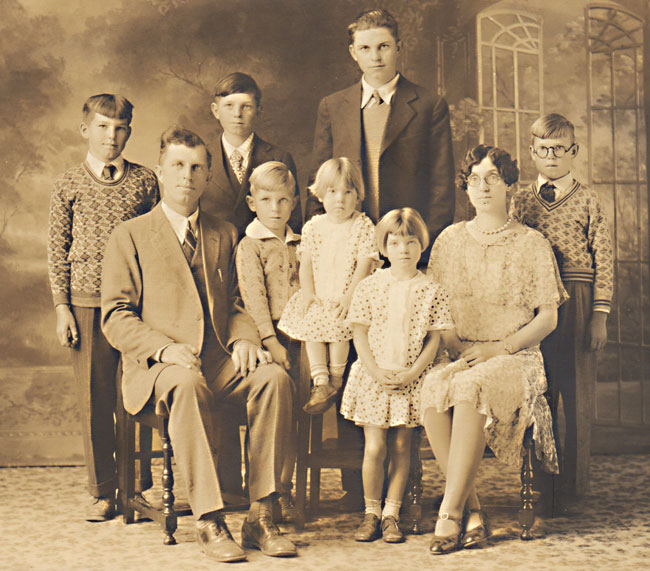
My Story, an interlude . . . A Wyomingan Once Removed

May 14th, 2014

Years ago, when extended family members were asked to write something of their backgrounds, I was also invited. The following is an excerpt of what I wrote then.

We drove to Wyoming from the East to be part of a family reunion of the Moores. It was the first of a number of such times. I’d never been there, or seen any of these people that I was just learning I was related to. I was suddenly becoming aware of what it was to be a Moore, a unique heritage, and that rooted in a unique land. For me Wyoming has held special qualities ever since.
Sterling-cropped

But these Moores, they were like giants in the land, big sequoias with broad smiles and ready laughs. And there were so many of them, relating together in every room of that house that Grandpa built in Rawlins before I was imagined. That day they didn’t even see little me or realize that I hardly knew where I was.

Finally I learned to know them all, but I remember one in particular, Sterling, my dad’s younger brother by two years. I was awed. I had a younger brother by two years but he wasn’t like this. To me he seemed, along with Dad, to represent the qualities of all Wyomingans in general, that being a special breed, if nothing else, by association with this uncommon place.

Wyomingans. Aren’t they always tall? And limber?  And aren’t they always rugged but gentile (until cornered)?
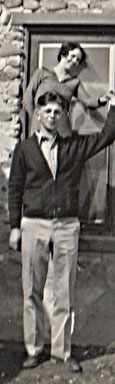
Dad-and-Mom-in-Window-115
Dad and Mom, before they had those identities, in Wyoming, still kids, years before they had any.

Aren’t they always jovial? And able? And strong?

And don’t they always have the weather and the elements etched in their faces?

Didn’t they all ride to school on a buckboard, if they had a school to go to, and if they didn’t, weren’t they smart enough figure out what they needed to know anyway?

Don’t they always have collections of found arrowheads and stories of rattlesnakes and shooting jackrabbits as big as small horses with a .22?

And don’t they all have that far away Wyoming sage-scape in their eyes?

Don’t they all have 49 brothers and two sisters who are just as brave?

And aren’t they all as hearty as their parents who raised them and were among the heartiest of souls who ever conducted a train across the reaches of the west or raised a family on nothing but grit and love and no choice but to do it?

This was Wyoming. And this was Moore. Since that day when I looked up and shook the giant Sterling’s hand, whenever I’m asked to give the place of my birth I tell them sort of quiet-like, “Pennsylvania.” But I hurry to add I just lived there ten days and that my parents were really from Wyoming!

With that I expect some respect.

——-

PS Incredibly I just came across a poem about Wyoming entitled Gertrude of Wyoming, a Pennsylvanian Tale. Click it and see.

PPS Also incredibly, I just came across the two following photos.
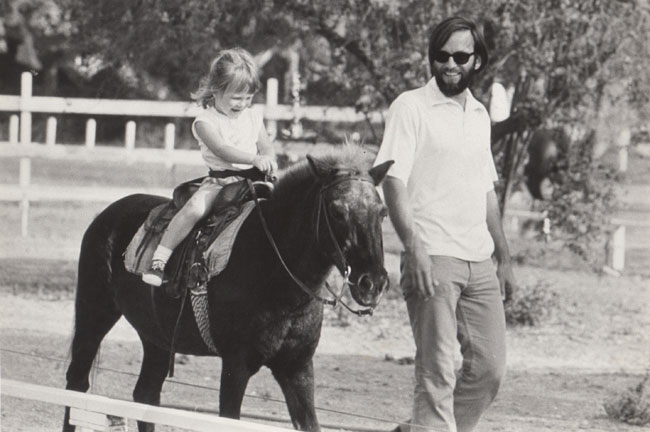
Allison-on-Pony-1974

Allison (3) and her dad (me), in California, 1974.
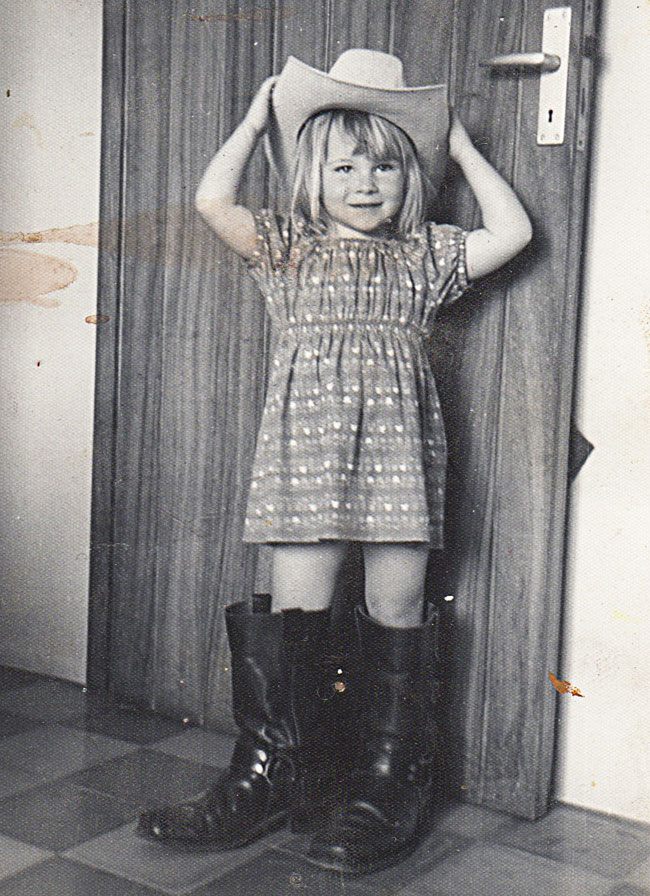
Allion-Hat-and-Boots-1975

Allison (4) in her dad’s gear, in Guatemala, 1975.
7 Comments

Dad’s Story, part 10, Photos from CCC Days

May 12th, 2014

The following is a selection from Dad’s 1934 photo album. Many of those include people, these not so much, documenting more the places. Hearing CCC mentioned often while I was growing up, I get the idea these were formative years for him.

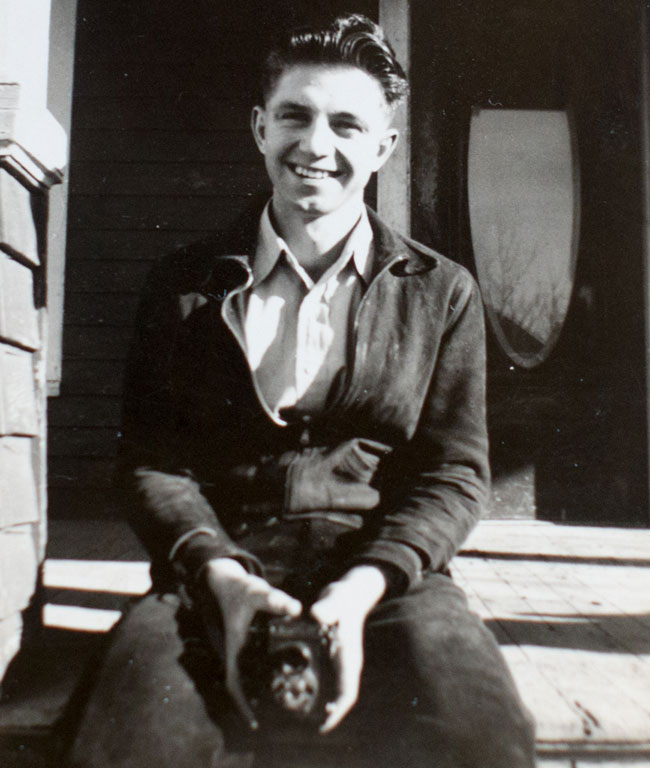
Dad-with-Camera

Dad with his camera, a fixture he adopted early and continued most of his life.

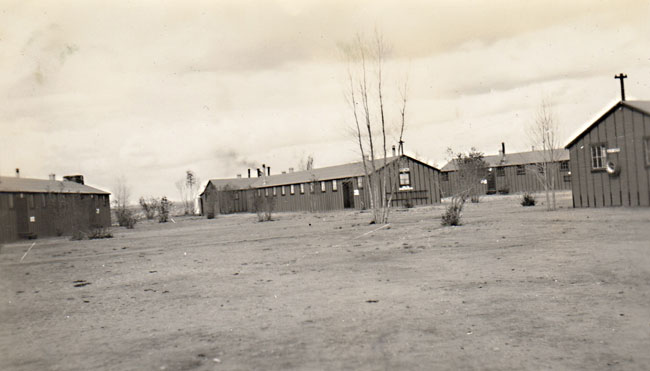
CCC-Buildings-Camp-1801

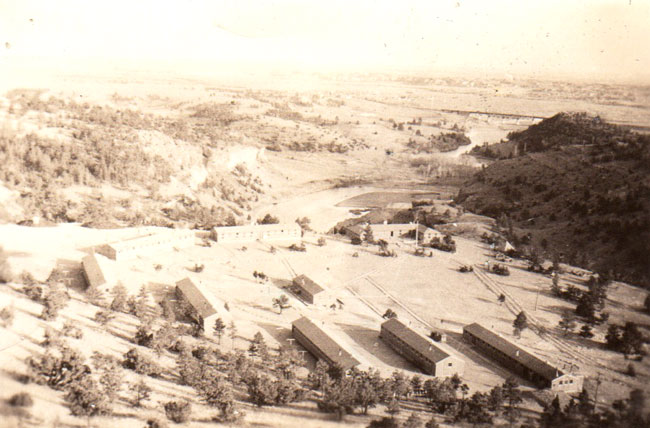
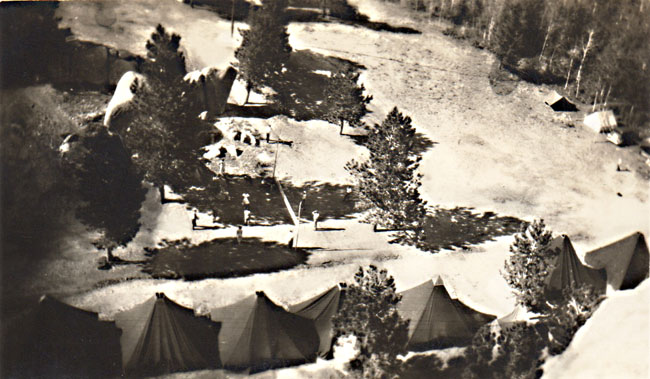
Camp 1801, where Dad served most of the time. Looks pretty bleak and cold. At least the tilt of the camera adds interest.

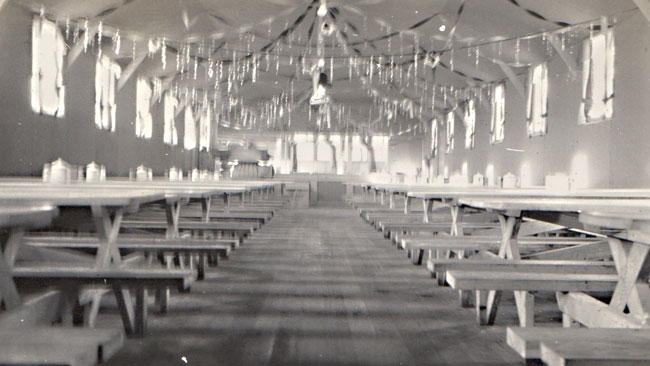
CCC-Mess-Hall

Mess hall. A study in single point perspective. The “streamers” may be for a holiday. Or is it fly paper?

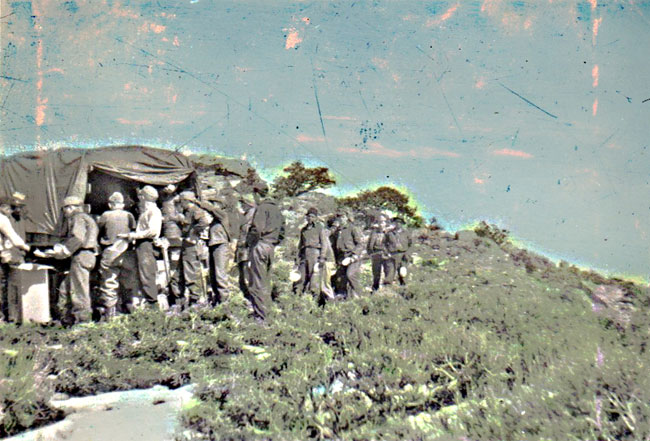
CCC-Food-Line

A midday meal out on the work site, and early experiments with color tinting.

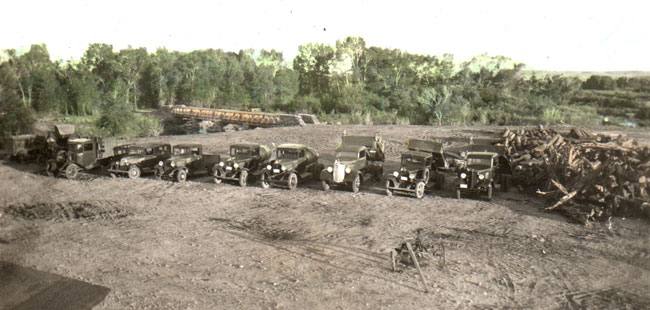
CCC-Line-of-Trucks

Park service trucks in a cleared field next to a new bridge on the River Platte.

CCC-Work-Crew

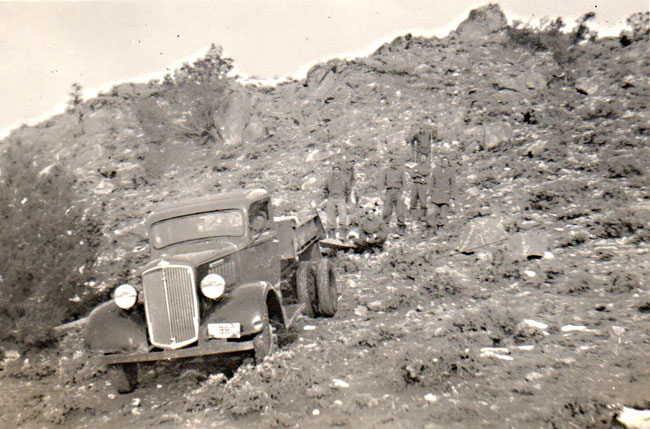
All those national parks we enjoy? This is how they were built. Look closely to see the workers behind the truck.

CCC-Bunk-House

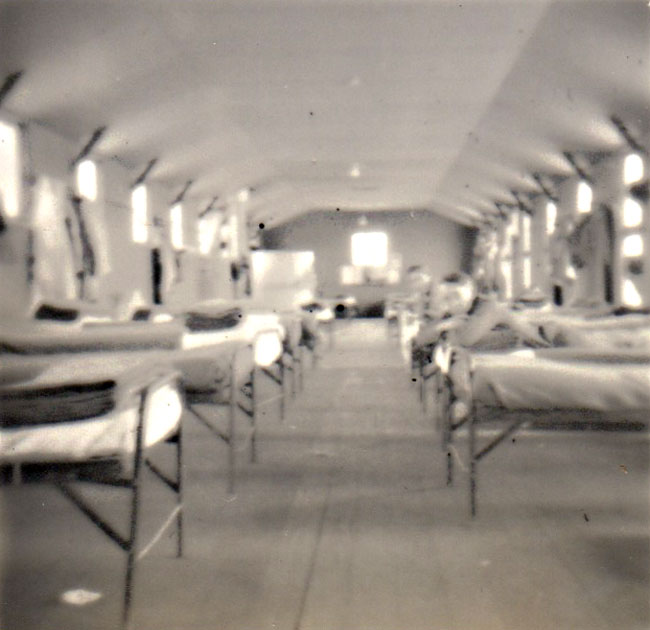
Focus a little soft here, but all the beds are made and all belongings in order (the few that there were).

CCC-Latrine-with-Man

The latrine. These guys didn’t build anything that wasn’t substantial.

CCC-Guernsey-Lake

CCC Co. 844, Guernsey Lake. Another camp served in Wyoming. Note on back says “New Quarters.”

CCC-Eagle-Peak

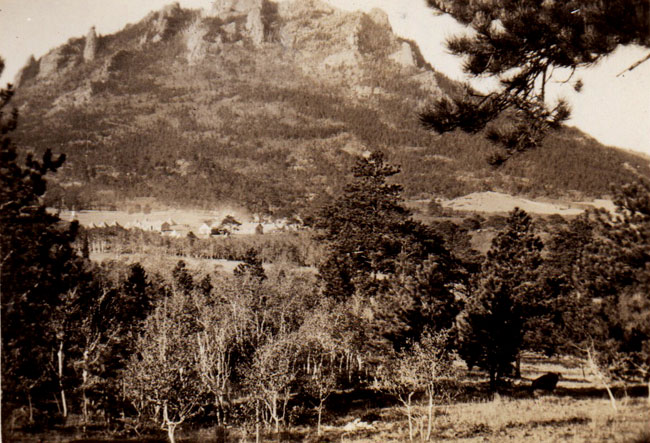
Noted on back: “Eagle Peak, CCC Co. 3850, where I was stationed three weeks, surveying roads.”

CCC-Typist

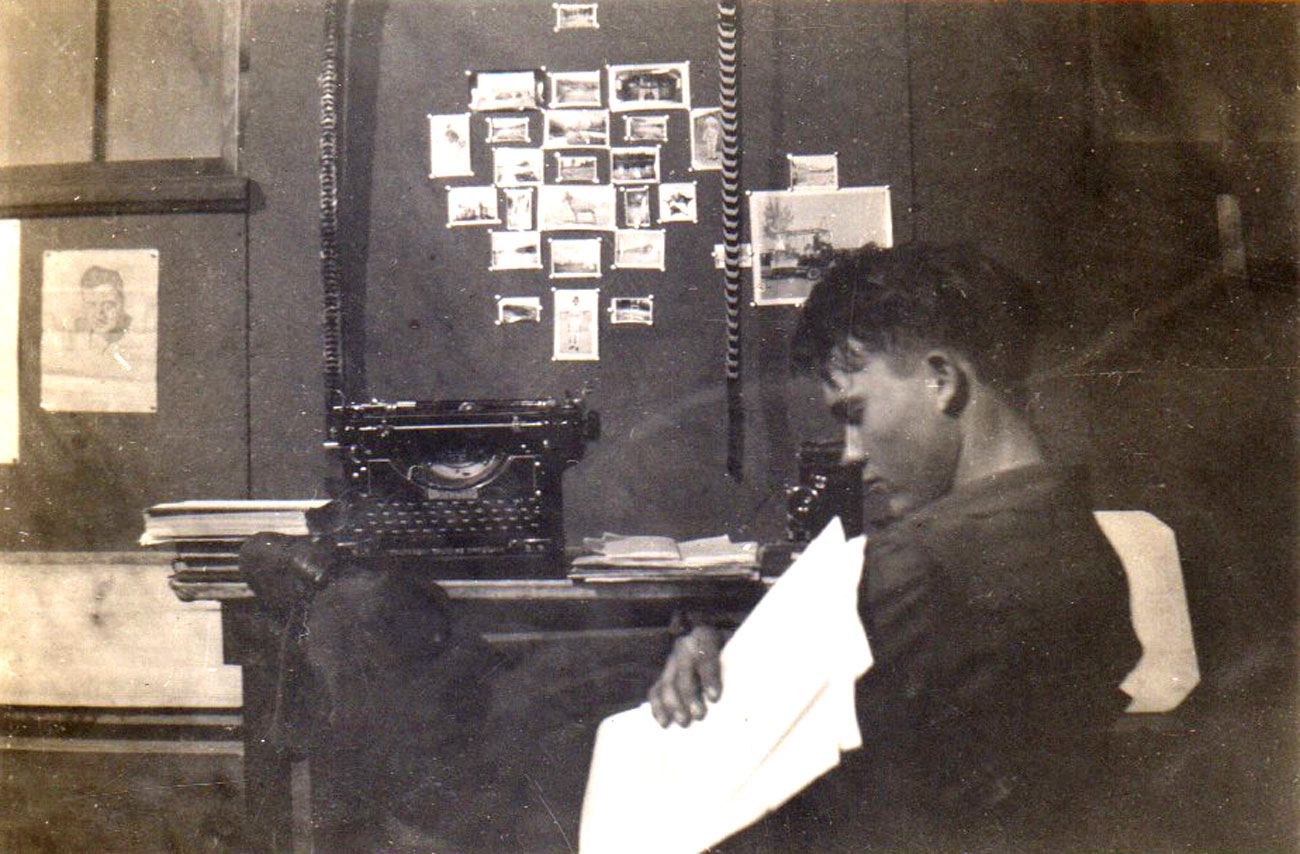
A sleeping clerk. Doesn’t look like Dad, though could be a shared desk, with his photos up, his typewriter, his camera. (Click photo to enlarge.)

CCC-Horse

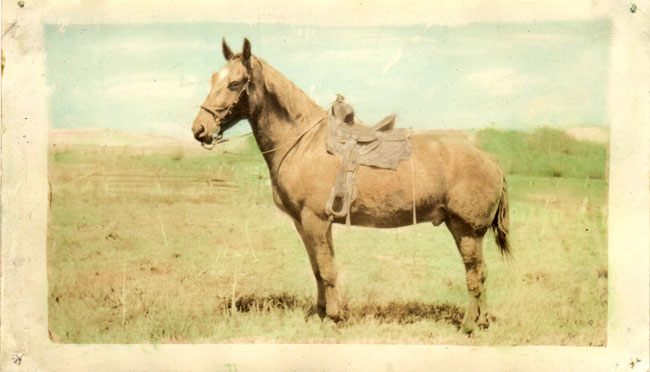
I only include this horse as it seems indeed the same photo pinned on the typist’s wall (above). All from the same photo album.

CCC-Airplane

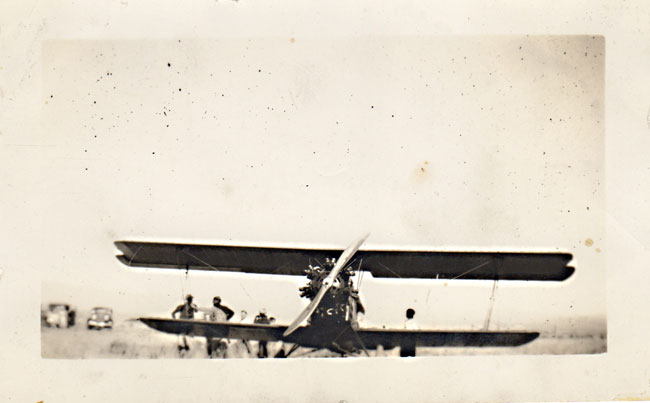
Air transport between CCC camps was probably rare, but there’s some reason this photo’s included in the album.

CCC-Volleyball-1

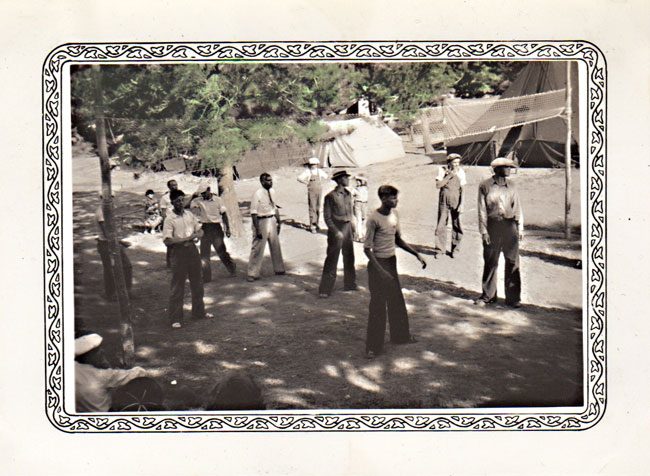
This must be Camp 884, “old quarters.” Those tents likely very cold in winter and hot in summer. Note the volleyball game taking place.

CCC-Volleyball-2

I just had to include this photo. If you didn’t know it was a volley ball game you’d not know what to think. As it is, it’s pretty strange, and not exactly sports attire.

Mom-1935-Color-Retouched

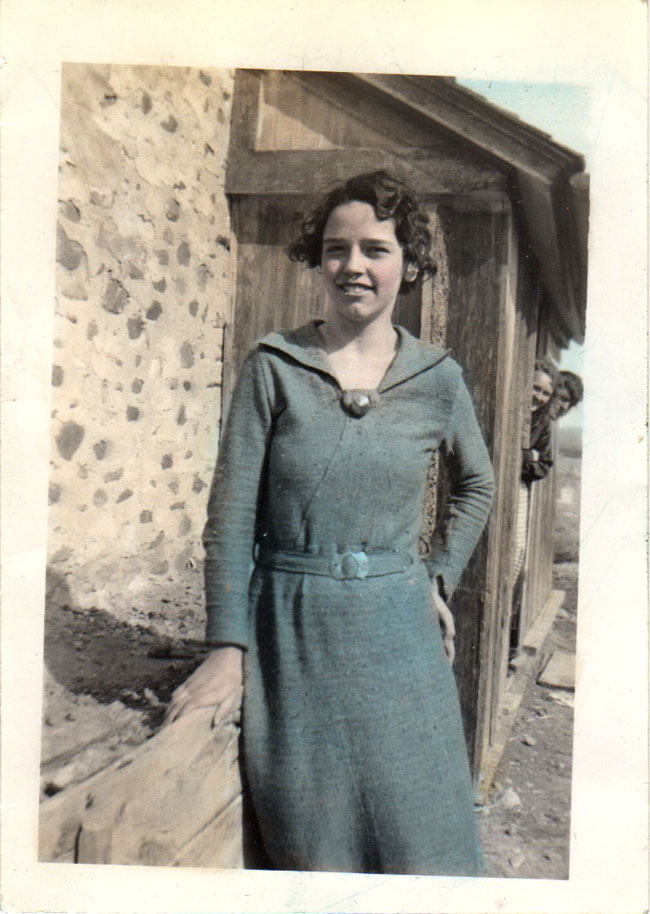
Finally, one more. Sweetheart Betty, with lots of care to color retouching. But my question: Whose are those faces looking on from behind?

_______

Next: The couple is separated for two years. Mom’s story, part 1.


6 Comments

Dad’s Story, part 9, CCC Days

May 11th, 2014

Here’s more description of the CCC days. It’s by Sterling, Dad’s younger brother by two years. Since Dad’s account was so brief, and their experiences were so similar, this fills it out a little.

Sterling-Dad-1939

Brothers Sterling (left) and Hyatt in 1939, slightly after this account was written by Sterling.

The depression following the stock market crash in 1929 was still on and jobs for young men with no experience were very scarce. My first job was helping build a telephone line up to a ranger station in the mountains west of Encampment, Wyoming. That fall there was still no work, so I joined the CCC and was sent to Cheyenne where they were building a park. Because I was a good typist I immediately got the job of company clerk, which paid more than the $21.00 per month most men got.

The tour of duty in the CCC was six months, so I was discharged in spring, 1937. I worked in the hayfields around Saratoga that summer for $30.00 per month, plus room and board. I really enjoyed that because of the peaceful country and although I was very busy, the horses did all the work. No tractors, just teams of two horses.

After haying was over, there were no jobs to be had, so back to the CCC. This time I landed in a forest service camp 20 miles west of Laramie, Wyoming. I got the job of forest service clerk, again due to my typing skill. I enjoyed the clerical jobs because they paid more, but also because they kept me indoors when it was 30 degrees below zero, four feet of snow and snowing sideways as it often did in the Wyoming winter.

The spring of 1938 I got out of the CCC again and joined Hyatt as a railroad extra gang changing ties. It was back-breaking work the first couple of weeks, but after you got hardened into it, it wasn’t so bad. The pay was good, $78.00 per month plus board and room, and the food was good.

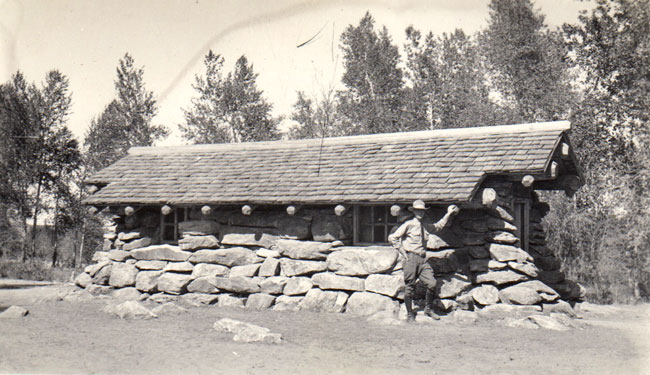
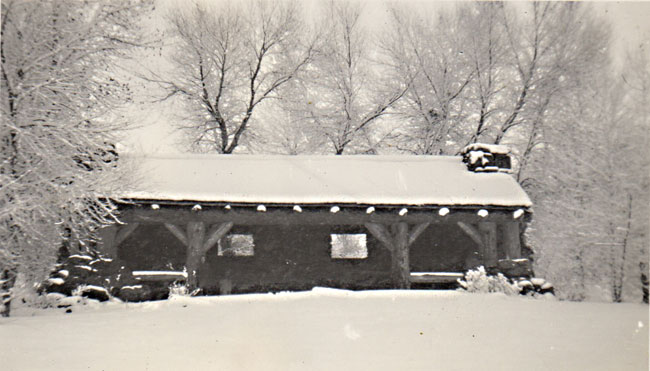
(Below) Saratoga Park Shelter House in winter, a good place to be inside when temperatures read 30 degrees below. Photo by Hyatt Moore ii. 

I would walk to the local store each evening and buy food for my supper, milk and cereal for breakfast and sandwich materials for lunch the next day. Milk came in quart glass bottles so I would put one quart in my thermos bottle and the other between my legs in bed at night to keep it from freeing. Many times I would find that quart beside my leg the next morning frozen solid.

Snowy-Day-CCC

Next: More of Dad’s photos from CCC days.

4 Comments

Dad’s Story, part 8, He Pops the Question (Statement)

May 6th, 2014

Dads-Album-Mom-Truck

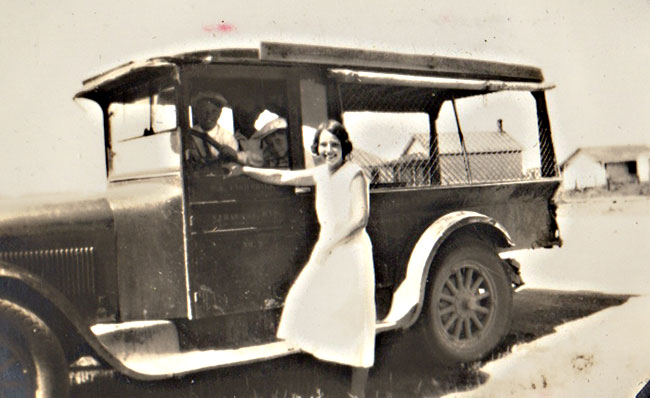
Nothing was said about a truck, but close enough. Note the rolled up canvas siding, the split windshield, the sun visor, and the spoke wheels.  All classic!
(Not to mention the babe.)

Here’s the continuing saga from my mother’s point of view:

My family lived about a mile out of town, the opposite direction from the CCC camp. My dad had bought me an old car and I had just learned to drive. (I was 16.) On our first date my parents allowed me to drive the car into town to meet Hy. I can’t believe it yet, I wouldn’t have let my daughters do that!

We were early for the movie so we went for a spin. On our way back into town we had a flat tire. People I knew from school passed us as Hy was changing the tire and they hooted and made fun of us. I was so embarrassed I wanted to die.

(Four years later the same thing happened; we had just started out on our honeymoon from Yuma, Colorado and about a mile out of town we had a flat tire. Again acquaintances drove by and laughed. It was even worse that time because we had “Just Married” written all over and tin cans hanging from the back.)

Later my folks moved into town. I don’t remember what happened to the car, but since town was small we walked everywhere. After we attended a movie we would go to the drug store, Donlan’s Pharmacy, and share a malted milk with two straws. One of those times he told me he was going to marry me. He didn’t ask me, he just told me.

I was so embarrassed I couldn’t talk or look at him.

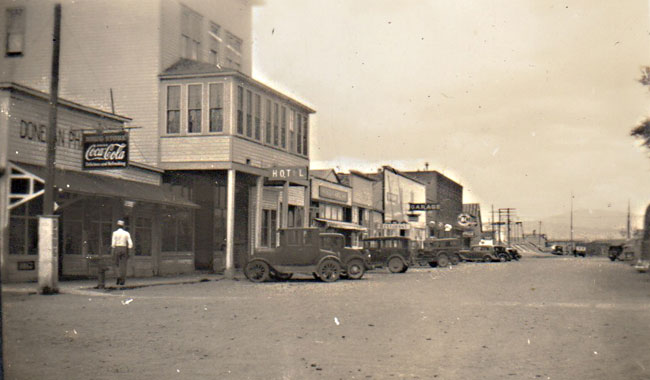
(Below) Donlan’s Pharmacy on a Saratoga main street, where they shared malts and Dad made his pronouncement.

And continuing in Dad’s (briefer) words:

Later, while having a soda at the local drug store, I told Betty that I was going to mary her. It was a statement, not a request.

She was just 17.

Town

That was years before it actually happened, and for two years they were separated by distance and didn’t see each other at all. Still, it presaged a marriage that lasted over 70 years.

Next: It’ll be an e-gallery, our monthly “art update” blog with live painting in Tucson. We’ll continue with “Dad’s Story” after that.

8 Comments

Dad’s Story, part 7, Enter a Pretty Girl

May 4th, 2014

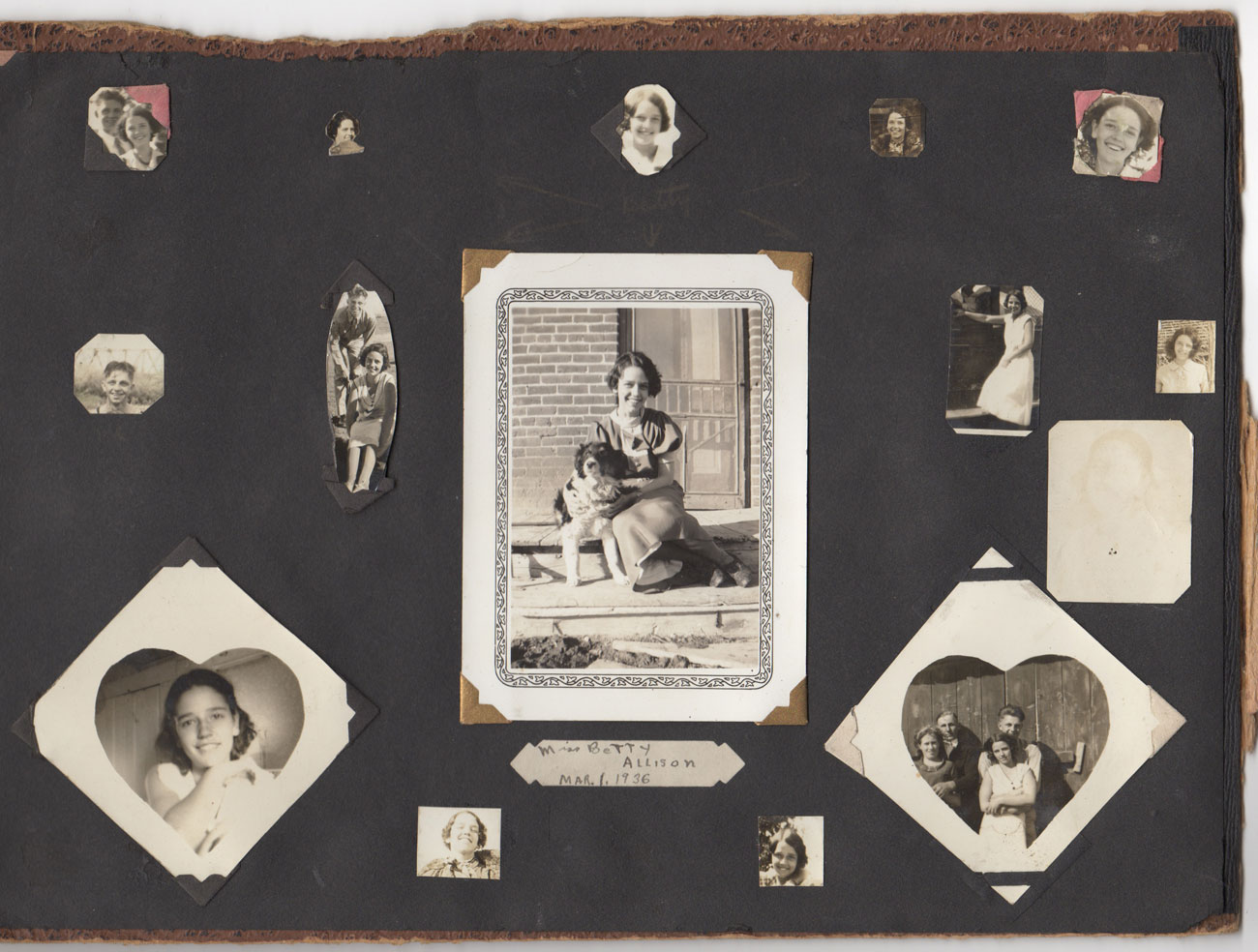
Sometimes Dad would recount how painfully shy he was as a boy around girls. He spoke of one he liked in high school, walked with her, but would never venture a word. That reticence is something he apparently overcame once Betty Allison came into view.

Betty-Allison-in-Heart-Shape

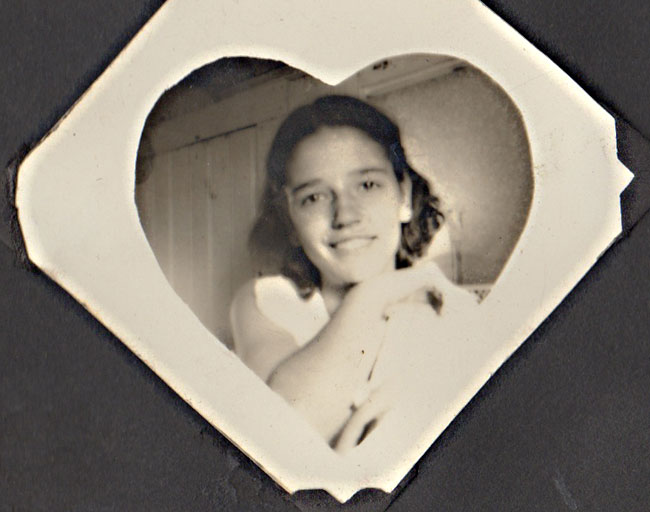
Betty Allison, sweet 16 or thereabouts, the new focus of a man with a camera.

While we were in Saratoga, I went to church (we had no CCC work on Sunday). The man who taught Sunday school ran the local theater and if you came to his class you got a ticket to the theater for any time during the week. (The theater was not open on Sunday.) A friend said that I should go with him to the Presbyterian Church as there were some cute girls there, so I agreed to go with him if he would go with me.

It was there that I met Betty Allison.

I went to a party at the Saratoga Hot Springs Park where Betty attended. Then we went to a church outing at Gold Hill where we got better acquainted. After that we were together whenever there was anything going on.

Dads-Album-page-1-1300

(Above) Page 1 of Dad’s first photo album (of very many over the years). Click on it for larger view.
.
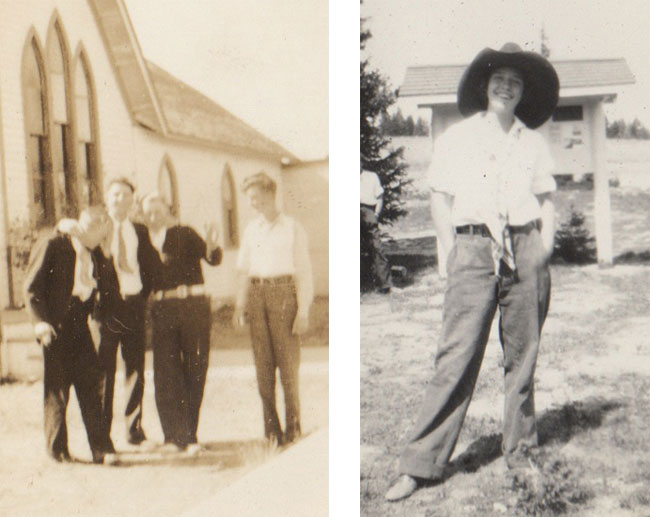
(Below left) Dad at church, in a tie.
(Right) The big hat. Contest over!
(Bottom) The picnic, with good sport Janice, arm around Betty.
.
(I’m quite amazed myself to have come across these photos.)

Here’s my mother’s recounting of their meeting, including things Dad couldn’t know at the time, or would never say.

I met Hyatt Moore ii in August 1935 in Saratoga, Wyoming. He visited my church as guest of our mutual friend, Billy DeBarthe. They were both in the Civilian Conservation Corps in Saratoga and had agreed to visit each other’s churches. A couple of Sundays later, my good friend Janice Wagener and I were at the church early, standing in the vestibule, looking out the window. Down the street we saw Billy and Hy (I never called him Hyatt) walking toward the church. Both of us thought Hy was rather interesting and attractive, so we made an agreement right then that both of us would “set our caps” for him, no holds barred, and whoever was ahead at the end of a month could have him, the other girl having to give up. A week or two after that, Janice’s mother gave our Sunday School class a party—a picnic at the Saratoga State Park. Hy was there when I arrived and he was wearing a borrowed cowboy hat, the biggest I’d ever seen. He put it on my head and I was sitting on the bumper of a car when Janice got there. She told me later that when she arrived she realized the contest was already over.

Church-Hat

Picnic-1935

More from Betty next time, and the pre-proposal.


8 Comments

Dad’s Story, part 6, Back in Wyoming, Joining CCC

May 2nd, 2014

There’s more between the lines that led to the family’s return to Wyoming, not mentioned by Dad. Suffice to say his mother was taking steps to keep their marriage together.

Dad's-Family-Standing-1930-1300

The date is marked, 1930, four years earlier than the story continues here. Comer is already at 6 ft. All the boys grew to that eventually. Looking closely, I note a Boy Scout pin on Dad’s lapel.
(Click on the photo to see it too.)

After four years in Washington Dad’s job on the railroad became steady and Mother was sick of trying to farm alone, so we moved back to Wyoming.

I finished high school in Rawlins in 1934 at 17 years old.

I had a Model T Ford I got from a junkyard for very little money (probably $25) and became quite good at keeping it running . . . as often as I could get gas at ten cents a gallon. Kerosene was cheaper and sometimes I would mix it with the gas up to fifty percent. Tires and tube repairs kept me busy.

There was no work but I was able to take evening classes in typing and shorthand for free.

I ran around with two other boys my age and in 1935 we decided to join the CCC* where everything was provided and $25 per month was sent to the folks. We were also given $5.00 as spending money.

The camp I joined was a “park camp” in Saratoga, about 40 miles from Rawlins. We were transported with about 20 boys on the back of a stake truck with a canvas cover. It was windy and cold.

When we arrived in camp we were immediately lined up and given shots as if we were in the army. (It was run by the army.) My friends Wilber Hart and Ted Hyatt saw that several of the boys given shots fainted in line, so they got back on the truck and went home, leaving me alone. I had made up my mind to stay, so I took the shots.

We were put on K-P for ten days for the shots to wear off.

While in camp I heard that the assistant educational adviser was leaving so I asked what he did. I knew I could do that so I told the educational adviser that I could do that, as well as teach typing and shorthand, so he threw me the keys to the educational building. I was now the assistant educational adviser with a raise in salary to $6.00.

I never went out to work at the camp.

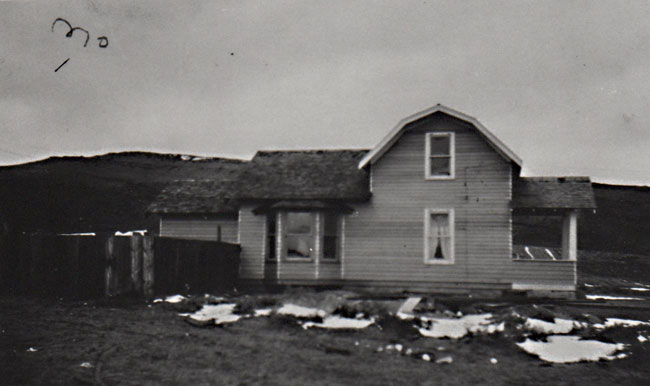
Rawlins-House

Somewhere during all this, Dad’s dad, who was also a builder, built this house in Rawlins. They were still in it when I attended a family reunion there once as a child. By then it was in a neighborhood, among other houses, but here it seems very much on the outskirts.

*The CCC is the Civil Conservation Corps, a national depression-era program that put men to work when there was no work. Many of our national parks were built by them.

His making up his mind (to stay), regardless, and the kind of “I can do that” confidence displayed here were what I recognized in him as life long traits. I asked him once if he’d learned to do so many things (like keeping that Model-T running and everything else) from his father, but he just said his father never taught him anything. It wasn’t a statement of disrespect, it’s just how it was.

What Dad doesn’t mention here, but it bears notice, is that it was during this time that he learned photography, including darkroom developing. He taught himself, then taught others. The results for us are many early black and whites of his friends, and especially one special friend who was about to come into his life.

__________

Next: Enter a pretty girl.

7 Comments

Dad’s Story, part 5, Venture to Washington

May 1st, 2014

We’re continuing the saga in Dad’s own words. You must understand one thing: Dad was incurably positive. Besides that, as a child he could hardly know all his parents might be enduring. They moved to Washington to farm but railroad work had his father often back in Wyoming. Meantime, his mother was trying to hold things together many states away, with seven children! 

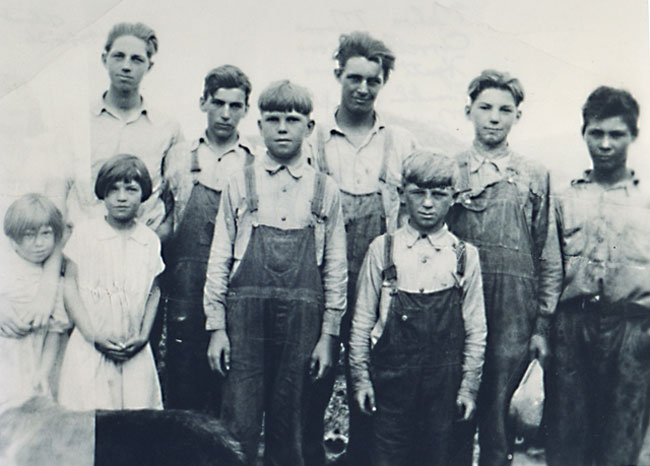
The-Boys-1935

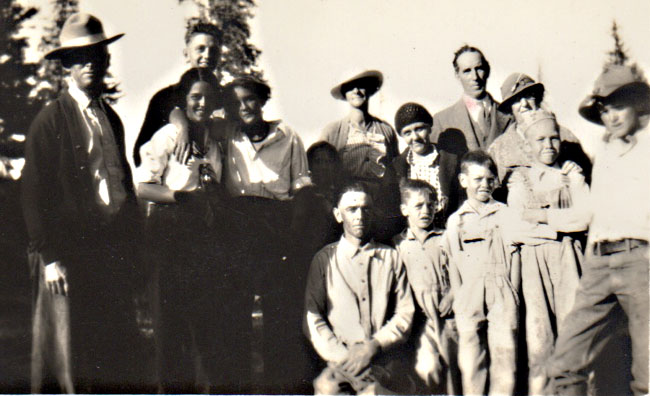
Don’t you love this picture! Looks our “Our Gang!”
That’s Dad in the back, our left, age 18 or 19, next to him a friend, then Muriel, another friend, young Burwin, then Sterling, and another friend. Front row left are the two sisters Melva and Orrelle.
Who knows where big brother Comer was, out bossing somewhere, or taking the picture?

When I was in the middle of the eighth grade, the folks sold the homestead and moved to Washington. (Meaning they’d “proved up” on the homestead and it was now theirs to sell, for which they got very little cash, from a large rancher.) It was during the Christmas holiday. (Meaning, it was the middle of winter.) Mother and six children came on a railroad pass to Chehalis. Comer and Dad came later with a truck.

Dad had always wanted to farm and some of the railroad people he worked with convinced him that Washington was the place to settle.

We arrived at Pe-Ell to a farm rented from one of Dad’s friends. It was rather a miserable place for Mother, but exciting for us kids. It was beautiful, wooded country and mild weather compared to Wyoming.

We loved it.

The next year we moved to a better farm near Winlock, Washington, where we stayed for more than two years.

I trapped skunk, weasel and mink and sold furs for pocket money. We were within walking distance of the Cowlitz River and we three boys went swimming and floating on logs through the summer. We raised rabbits, chickens and cows and sold cream and eggs. We cut firewood from logs left from logging. One log was larger in diameter than I was tall. Comer and I worked all day to make one cut with a crosscut saw.

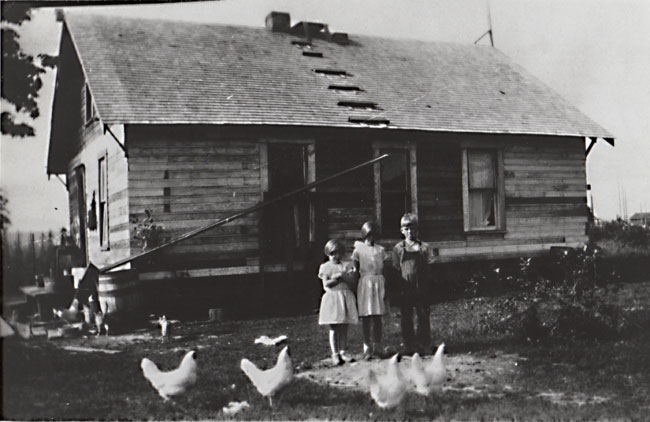
(Below) Was this the “better” farm in Washington? In front: little Melva, Orrelle and Burwin, with suppliers of breakfast.

I attended Toledo High School, going on the bus. I went out for football but spent most of the time on the bench because I was small, not having got my growth. Comer, on the other hand, was large and played in all the games. He and I attended the same class as he was delayed in school because of the move.

Washington-Farmhouse-650

Next: Back to Wyoming, Dad joins the CCC.

5 Comments

Dad’s Story, part 4, Only Potatoes, then Nothing

April 30th, 2014

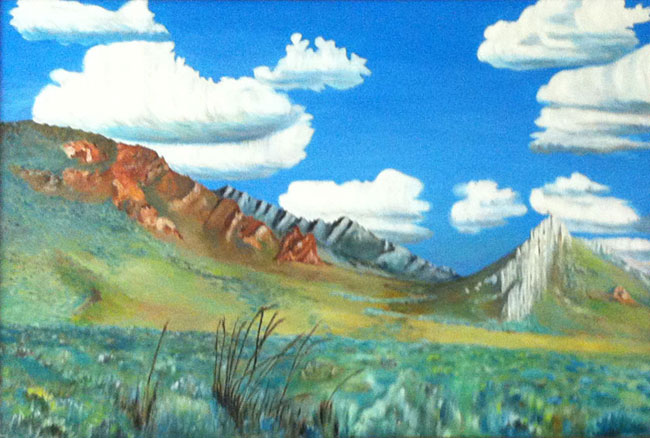
Homestead-painting-650

Here’s the painting Dad made from a photo he took many years later. By then there was nothing left of the buildings his dad built. The one time I visited, it didn’t look this green. As far as I know even today it is as desolate and uninhabited as ever, and not a place where you want to run out of food.

The following entry is from another remembrance, supplied by Orrelle, one of Dad’s two younger sisters. Interesting that Dad never mentioned it.

It was late summer or early fall, before we girls were born. Mom told me how she and the five boys were out on the homestead and food was running low. Burwin was 6 months old, so that would make Muriel 2, Sterling 4, Hyatt 6, and Comer 8. Pop was away, as he usually was, working or trying to get work on the railroad.

Finally they were out of everything but potatoes for over a week and then down to nothing. That’s when they got news by a passing sheepherder that some supplies had been left at GP-16, by the oil wells.

But Mom had a problem. She couldn’t go herself as she would have to take Muriel and baby Burwin. So early the next morning she sent Comer and Hyatt with the cart and horse, the only transportation they had. She waited all day, still without food, and now beginning to get worried.

Then in the late afternoon Comer came riding in on the horse. He was lugging a wheel from the cart. It had broken out on the sand dunes and he had left Hyatt to guard the groceries.

Mom put Muriel and Burwin to bed (again without supper) and told Sterling he was in charge. He was 4. She told him to lock the door and not open it until she returned. Then she found another wheel somewhere and returned with Comer to where Hyatt was dutifully guarding the groceries.

By the time they got back to the homestead it was quite late and dark. They banged on the door but the only one they could raise was Muriel, but at 2 he was too little to unlock the door. They finally pushed Hyatt in through a window!

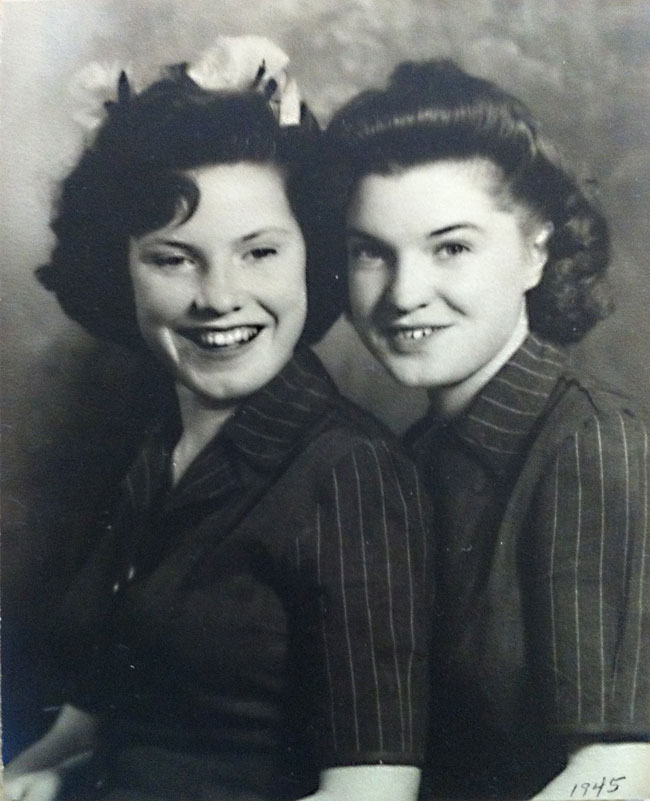
(Below) I didn’t know where else I could insert this picture, Dad’s two sisters, Orrelle and Melva, as they were in 1945. What beauties, no? Taking after their mother.

Mom made dinner and woke Muriel and Burwin up because she knew they would be hungry. She tried to wake Sterling. She shook him and shook him without result. In desperation she started to spank him but he just started to laugh. The more she spanked the more he laughed, like it was getting funnier and funnier all the time. Finally she gave up and put him back to bed. In the morning he didn’t remember a thing. But he was ready for breakfast.

Orelle-and-Melva

Next: The move to Washington State

8 Comments

Dad’s Story, part 3, The Snakebite

April 29th, 2014

Here are three accounts of a story I heard many times growing up. First in Dad’s words, then Muriel’s (the one that got bit), then Sterling’s, adding more detail to how they spent their days.

Dad-1931
Dad, some years older than at the snake bite caper.

For us kids it was ideal, spending summers at the homestead. We would take a lunch and be gone all day . . . to the mountains and other places. Sterling, Muriel and I were always together. Comer was the oldest, two years older than me, and the boss, so we didn’t play with him. Burwin was six years younger and too small for most of our hikes.

One day we went to the sand hills about two miles away. We were racing and jumping over sage brush and Muriel landed on a rattlesnake. I asked if he got bit and he said it just tapped his foot. I had him take off his shoe and we could see that he was bit, even if only one fang had penetrated.

We put a tourniquet on him and carried him to a sheep wagon near by. I sent Sterling to get Mother. After some delay Mother came. She’d forgotten to get the snake-bite kit and had to return for it. She was with a neighbor in a car and they took Muriel to town. Town was 50 miles away and a four or five-hour ride. The doctor gave Muriel an anti-venom shot, and that’s what almost killed him. It has been my opinion that Muriel would have survived without the doctor’s help.

Here’s Muriel’s account: 

Muriel-1931
Muriel, also years after surviving the bite (and the doctor).

We were going to the sand hills to go swimming. We were jumping over sagebrush to see who could jump the highest. I jumped over a huge one and came down on a rattlesnake! Hyatt yanked off my shoe, found the puncture marks and sucked out the poison, while Sterling raced full speed for home (about two miles). Mother hitched up the team and came down to pick me up. She drove to Miller’s ranch where there was a car, but only the ranch hand was there who had only driven once. He said he’d try and we made it to town, only running off the road a couple of times. The doctor had a new snake bite remedy which he hadn’t used before and gave me too much. That’s what neaarly killed me. I spent several weeks in the hospital.

Then here’s Sterling’s story:

Sterling-1931
Sterling, the runner, aged between Dad and Muriel.

Comer, being the oldest, was the man of the house because Pop was gone most of the time. He took the position seriously, so he rarely played with the rest of us. Hyatt, Muriel and I roamed the country for two or three miles in all directions looking for magpie, crow and hawk nests, and exploring. We killed hundreds of rattlesnakes with rocks and sticks, cut off the rattles and took them home to Mom. She had several quart jars full of rattles by the time we left the homestead.

When we got hungry during our travels, we would get up on a ridge and look for the nearest sheep wagon. The herders were always so glad to have someone to talk to that they were happy to feed us pork and beans or chili con carne.

There were some sand hill lakes about three miles south of the house. They were beautiful lakes to swim in and it was on one of our trips to the lakes that Muriel was bitten by a rattlesnake. I must have been about 10, Hyatt 12, and Muriel 8. We were pretending we were wild horses, running as hard as we could, jumping sagebrush as we went. Muriel jumped a sagebrush and landed on a big rattler and it bit him on the foot. Luckily, Hyatt had joined the Boy Scouts the previous winter and had learned about snake bites and tourniquets. So he put a tourniquet on Muriel’s leg and carried him to the creek a short distance away to put mud on the bite to draw out the poison. Meanwhile, I ran home to tell Mom.

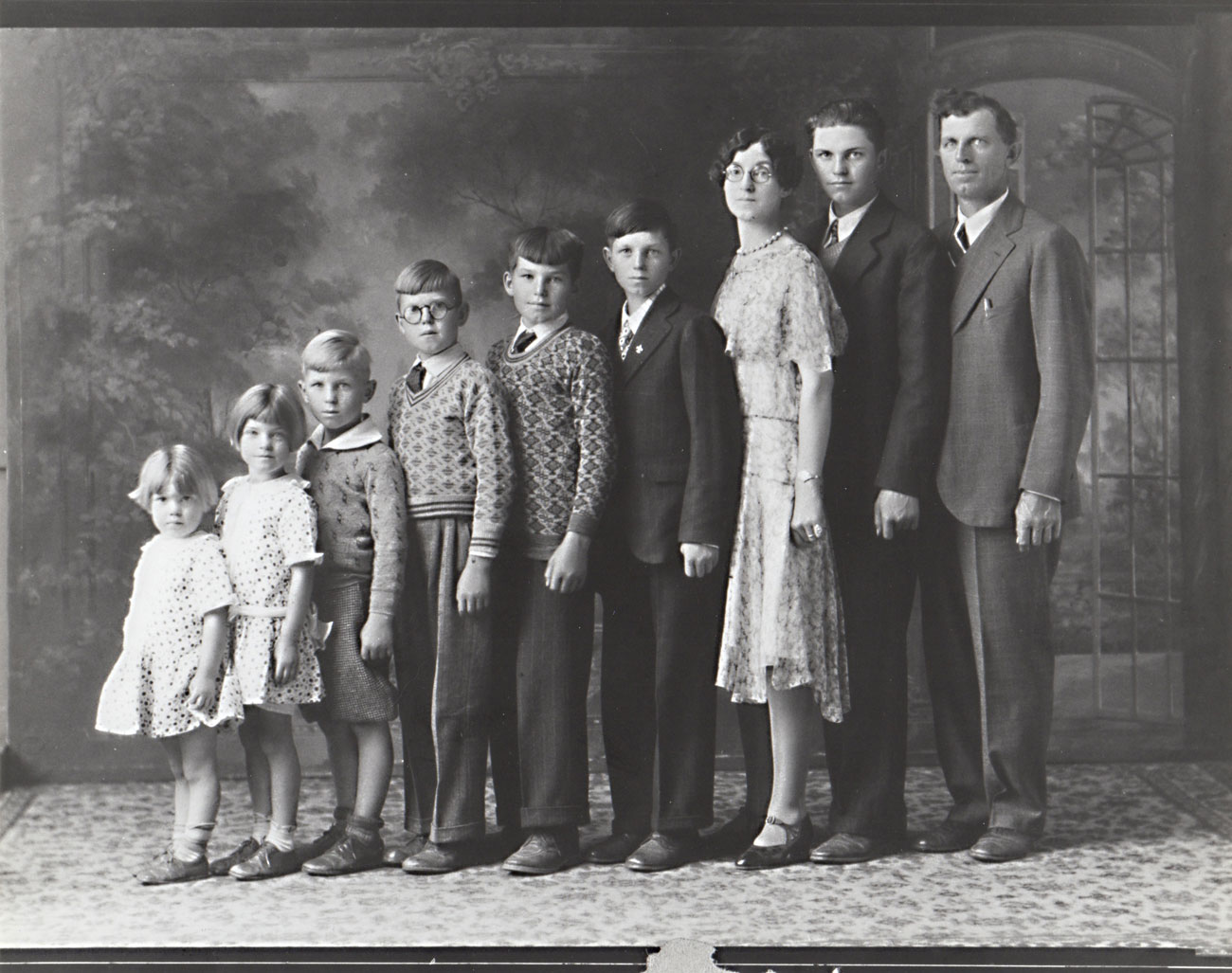
(Below) The full family in around 1931, all dressed up and feeling out of place. Note the early and great hight of first born Comer (back). No wonder they called him “the boss.”

When I told Mom about Muriel and where they were, she ran up to the road, on a ridge about 200 yards from the house, to try to catch a ride. We had no transportation of our own so I ran to the Fraker’s ranch, about three miles away, because they had a brand new Chevy. When I returned with them, I learned that Mom had caught a ride and was on the way to town with Muriel. He was pretty sick by the time they got to the doctor, but the tourniquet Hyatt used and getting him to the doctor fast, saved him.

Moore-family-1931

Next: Out of food, broke down wagon, child guards.

16 Comments

Dad’s Story, part 2, Schooling and Christmas

April 28th, 2014

Continuing the story in Dad’s words, with a couple extraneous photos…

My next recollection is about two years later when I was about 4 because Sterling was about 2 and I was helping him to cross the creek on a log and he fell in. I had to help him out. This seemed a very scary time because I thought this was very deep and wide. Later I realized the creek was quite small and could be waded.

Great-Grandfather-Charles-Rufus

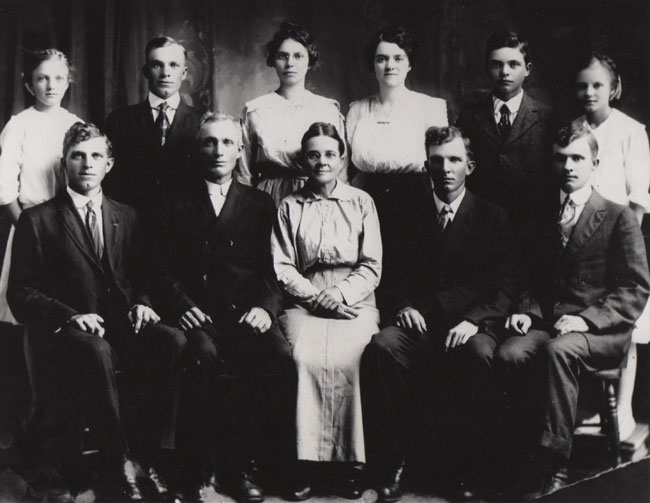
There are no photos of Dad and his brothers during these days, so I’ll use the occasion to show his dad, Hyatt Edwin (28), front row, left, and introduce you (and me) to my great-grandparents, Charles Rufus (52) and Abby (49) seated, center.
.
I must say, they’re a good looking bunch, all with their stoic expressions of a cat smiling, which was the way of the day.

While growing up on the homestead in Wyoming we would go to town in the fall for school and stay until spring. We did have several teachers come out and stay at the homestead, one after another, but it was too lonely for these young people.

Two winters we stayed at the homestead because of Dad’s low income on the extra board.

During the first winter the family went to GP-16 (an oil well community) for a Christmas celebration and dance. This was about 40 miles north. Every ten miles on the road, which was really just a trail through the sage brush, there was a cabin, stocked with food and wood. You could help yourself to the food but had to replace any wood used.

At the celebration Santa Claus, after giving out candy, lit up a big cigar and his beard caught on fire. It was an exciting performance for us kids.

Then we were bundled up and put on the floor to sleep in the next room while the adults danced. We managed to peek at them until we got tired.

Another Christmas I went to Rawlins with Dad to get supplies and Christmas gifts. He was again on the extra board and out of work.

We went with a horse and wagon, which took two days each way. On the way back it was so cold that Dad made me get out of the wagon and walk just to keep warm. (I read the same in the other brothers’ accounts, so apparently it happened to each of them.)

We stayed overnight at the Miller ranch. One of the cowboys said to come to the Miller ranch gate, about a mile from our place, on Christmas day and I’d find a surprise. My folks said, “Don’t put your heart on it as cowboys are likely to say things they don’t mean.” But on Christmas day Sterling, Muriel and I went down to the gate and found a large bag of candy. It made our day. (Dad often retold this story so it must have made quite an impression.)

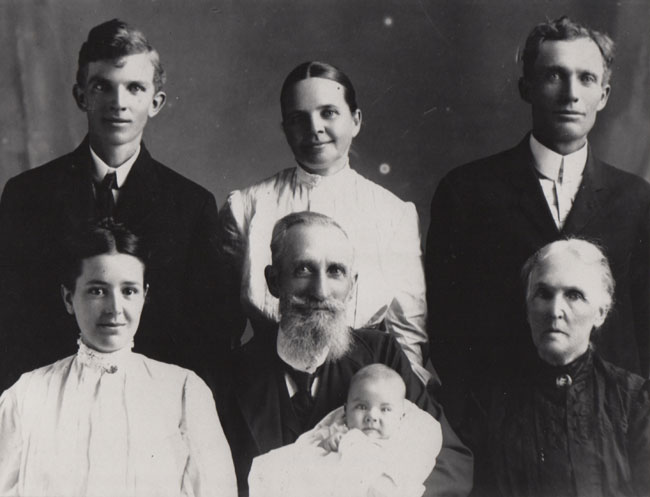
(Below) Say Hello to my great-great-grandparents, Levi and Lydia Moore, with great-grand-Charles Rufus, right.

That year we were given many used gifts in town to take back as we had very little money, but it was my most exciting Christmas, my favorite gift being an Uncle Wiggley game. (Maybe this was the beginning of his everlasting interest in table games, not to mention his almost unbeatable competitive spirit.)

Great-Great-Grandfather-Levi

Next: The story of the snakebite. (No photos for that either.)

8 Comments